Start with the scale of the hall
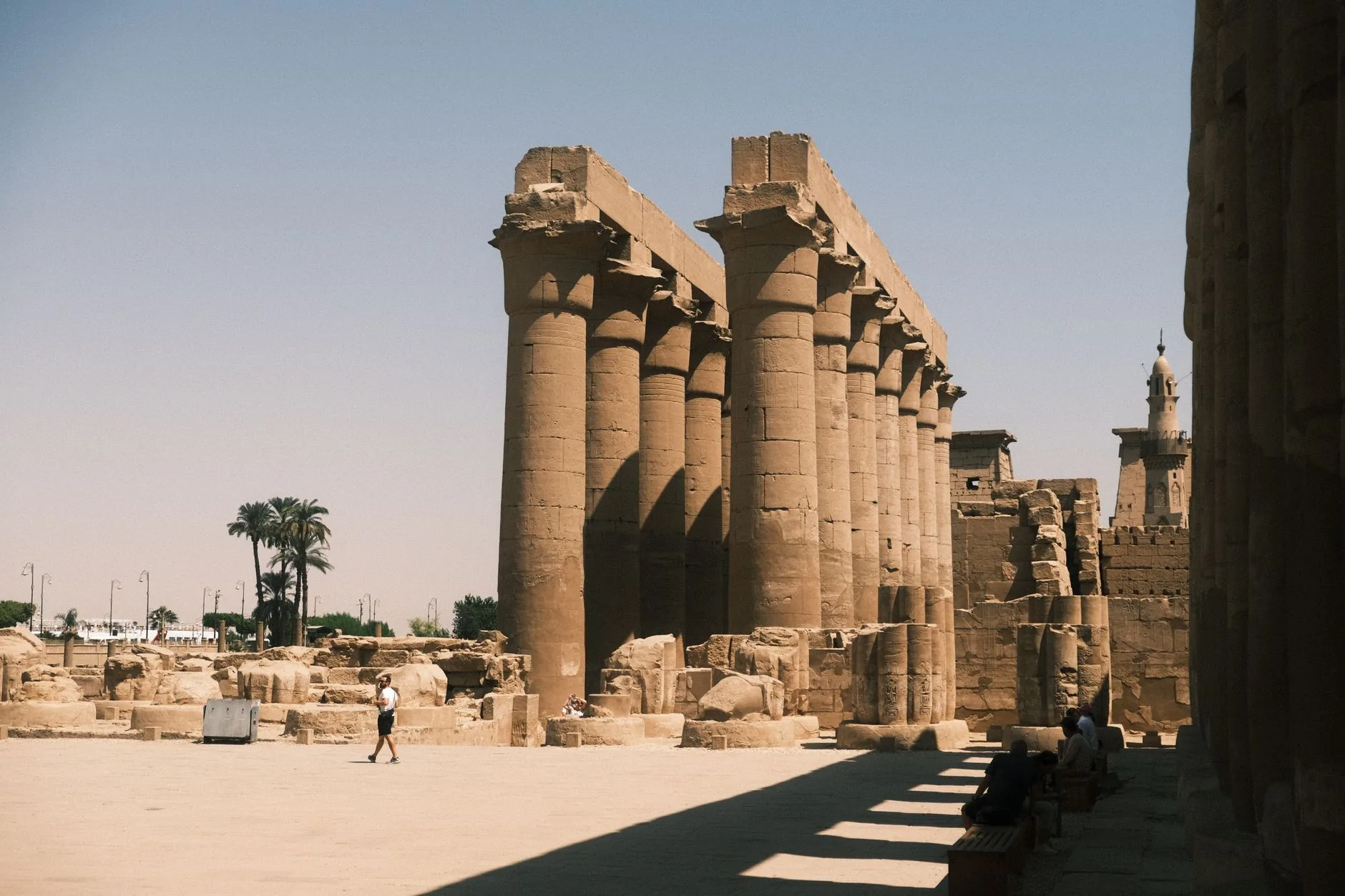
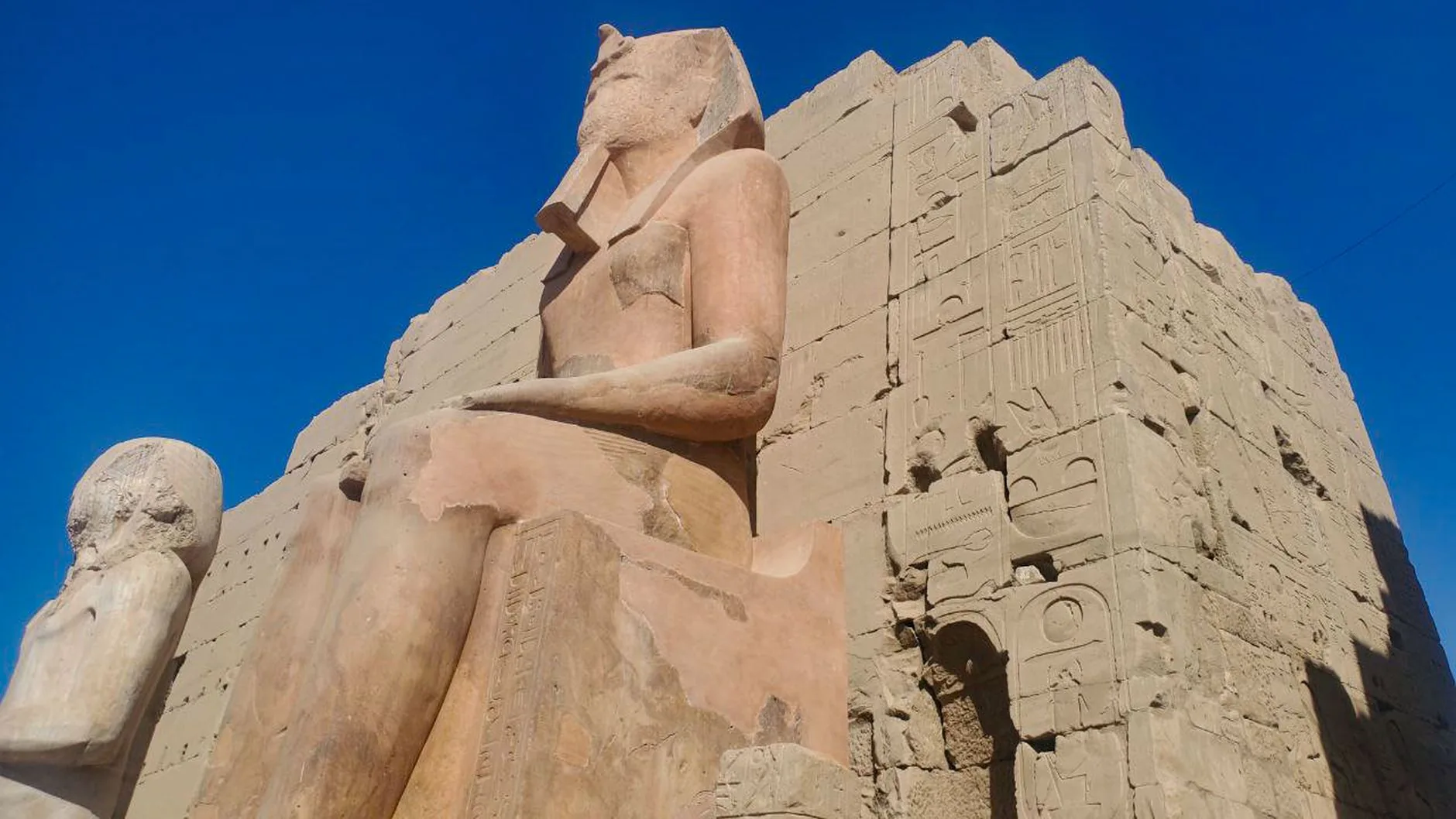
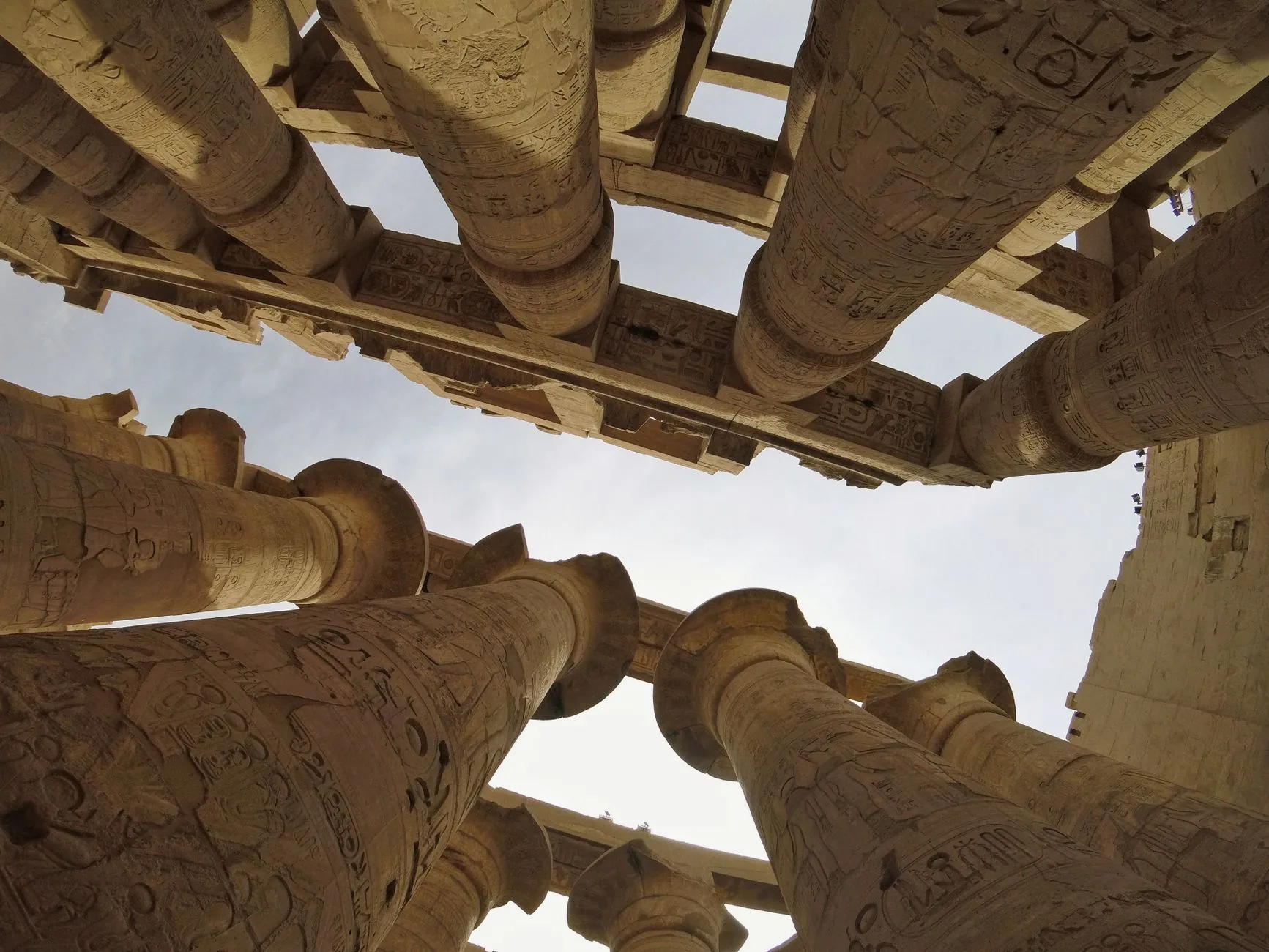
Walk into the Great Hypostyle Hall and notice how the central columns rise above those at the sides. Its forest of carved sandstone supports is the centrepiece of this visit: give yourself time to look upwards and compare the surviving decoration.
Use the hall as a place to slow down, not simply a passage to the next courtyard. A guide can help explain individual reliefs, but the change in scale and light is worth noticing on your own too.
Continue towards the obelisk
Look for Hatshepsut’s standing obelisk beyond the hall area, staying on the signed visitor paths. It gives a strong vertical reference among the lower walls and columns and connects Karnak with the queen whose mortuary temple stands across the river.
Do not assume every enclosed sanctuary is included or open. Ask staff about the available route rather than entering a roped area for a photograph.
End beside the Sacred Lake
The Sacred Lake provides a different view of the complex after the enclosed columns. Pause here before deciding whether you want another precinct; exposed paths can feel much hotter than the spaces you have just left.
The separate Mut temple is an optional extension with its own ticket, not an automatic continuation of the main route. Confirm its entrance and admission rather than buying a broader itinerary you may not have energy to finish.
Return to central Luxor for a meal
Arrange a taxi back to the centre and make lunch part of the break. Sofra Restaurant & Café is a useful choice for Egyptian mezze in an old house inland from the Corniche; it gives you a seated pause before any later sightseeing. Book ahead if you specifically want the terrace.
Luxor Temple makes a coherent second visit because the two sanctuaries were linked by the Opet procession, but it does not need to happen straight after Karnak. Rest first, or keep it for another day.
Mobile data for your trip. Check what your current plan includes for roaming. If you need another option for maps, messages and booking details, compare NXTL eSIM coverage and rates. Check that your phone supports eSIM and is unlocked, and check coverage for every stop. Download important maps and confirmations for offline use too.
Sun, tickets and current works
Take sun protection and drinking water even in winter, with a light jacket for a cold early start. Comfortable shoes matter on irregular stone paving. Check the official visitor information before departure rather than relying on remembered prices.
As of 21 October 2026, a 2026 official programme of Karnak visitor and monitoring improvements had been identified, without a confirmed blanket closure. Follow the current signed route; Packtricia will check for meaningful access changes, and readers should check the venue before travelling.
Check before you go
Opening arrangements and visitor rules can change. Check the official information before your trip.