Use Al Hussein as your starting anchor
Start from the Al Hussein Mosque square area and save Khan el-Khalili on your phone. The governorate locates the market beside Al Hussein and near Al-Azhar; those are useful geographical anchors, not promises of access to mosque interiors.
Choose a short out-and-back through the market before branching farther. Ask your driver for a clear meeting point on a vehicle-accessible street. The narrow shopping lanes are a walking outing; a car cannot collect you at every stall.
Mobile data for your trip. Check what your current plan includes for roaming. If you need another option for maps, messages and booking details, compare NXTL eSIM coverage and rates. Check that your phone supports eSIM and is unlocked, and check coverage for every stop. Download important maps and confirmations for offline use too.
Look up at the gateways as well as the shops
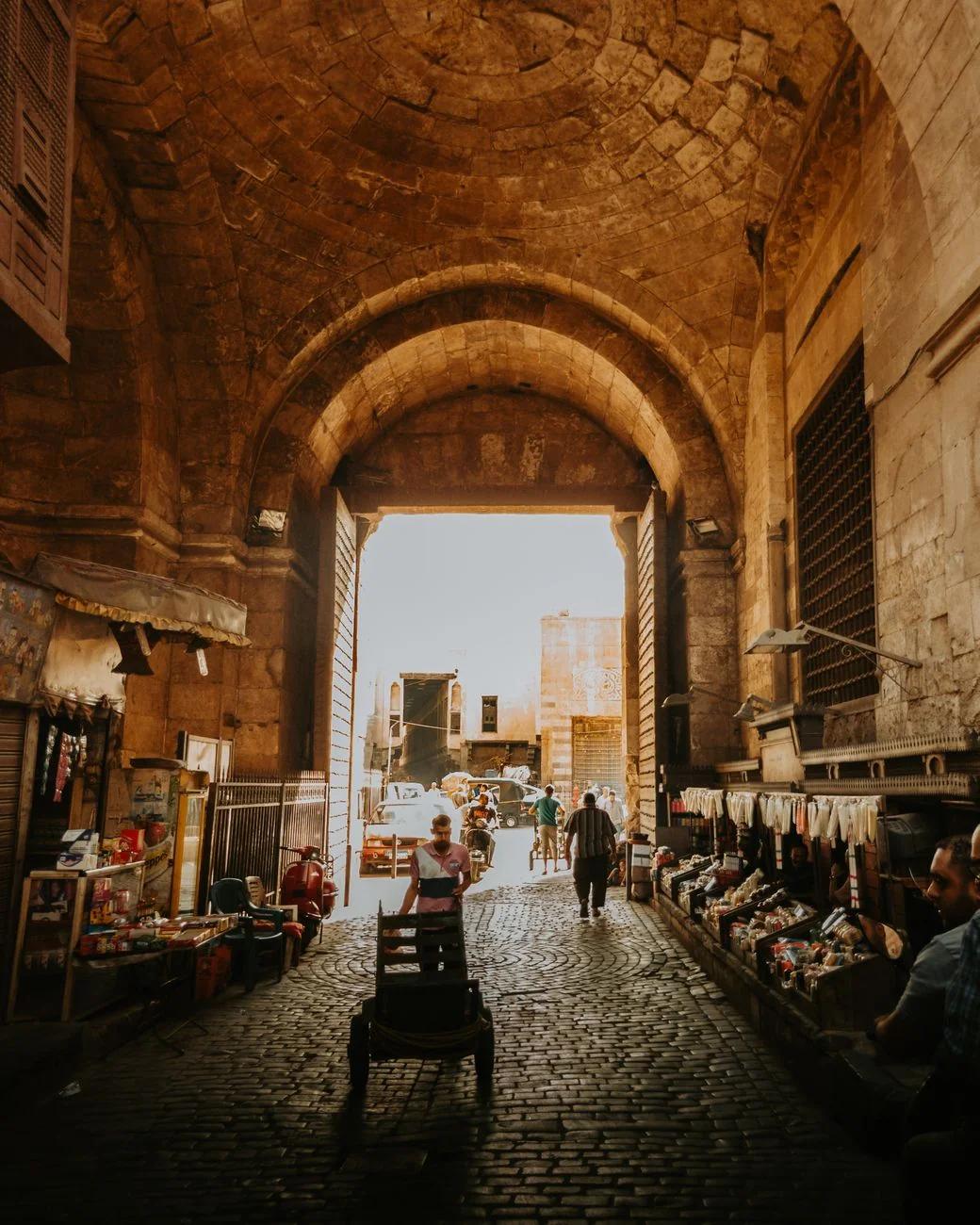
The stone market gateways are worth noticing between the displays. Look at the arches, recessed entrances and the way a shopping lane narrows through them. A gateway makes a better return landmark than a stall whose shutters may later close.
Browse lamps and metalwork slowly, comparing finish and materials. Ask permission before photographing a maker or shopkeeper, and distinguish an item made in front of you from a seller’s broader claim about its origin. You can enjoy the route without buying anything.
Pause at El Fishawy for tea
For a named break, consider El Fishawy Café, which the Egyptian Tourism Authority identifies within the market. A tea stop fits this route because it gives you time to sit among the lanes rather than leave the district for a meal.
Confirm the menu and price before ordering, and choose a different seat or skip the stop if smoke or crowding makes it uncomfortable. Do not rely on a claimed round-the-clock schedule; religious holidays and business arrangements can change the visit.
Keep shopping and the return simple
Agree a final price before buying, check the item you will actually take away and carry small cash separately from your main wallet. A short comparison between a few shops is more useful than following every offer of a special workshop or factory visit.
Return towards your saved square anchor while you still recognise the route. If you want a longer architectural walk along Al-Muizz, plan it as a deliberate extension with its own stops and admission checks; it is not necessary for this compact bazaar outing.
Choose the weather and pace that suit
Carry water, sun protection and a secure bag. The covered passages do not remove the heat on the approach, and busy lanes can feel tiring even over a short distance. Wear comfortable shoes and keep unfamiliar routes to daylight.
Shorten the visit to the square, a gateway and a tea stop if that is enough. Museum time at Tahrir is an alternative for another part of the day, reached by a separate transfer. Do not add a distant Giza visit after the bazaar without allowing substantial travel time.
Check before you go
Opening arrangements and visitor rules can change. Check the official information before your trip.