Start at Ibn Tulun Mosque
Save Ibn Tulun Mosque in Sayyida Zaynab and arrange a clear drop-off point. The mosque’s raised setting and approach require comfortable footwear; do not treat the area as a quick stop between two distant museum bookings.
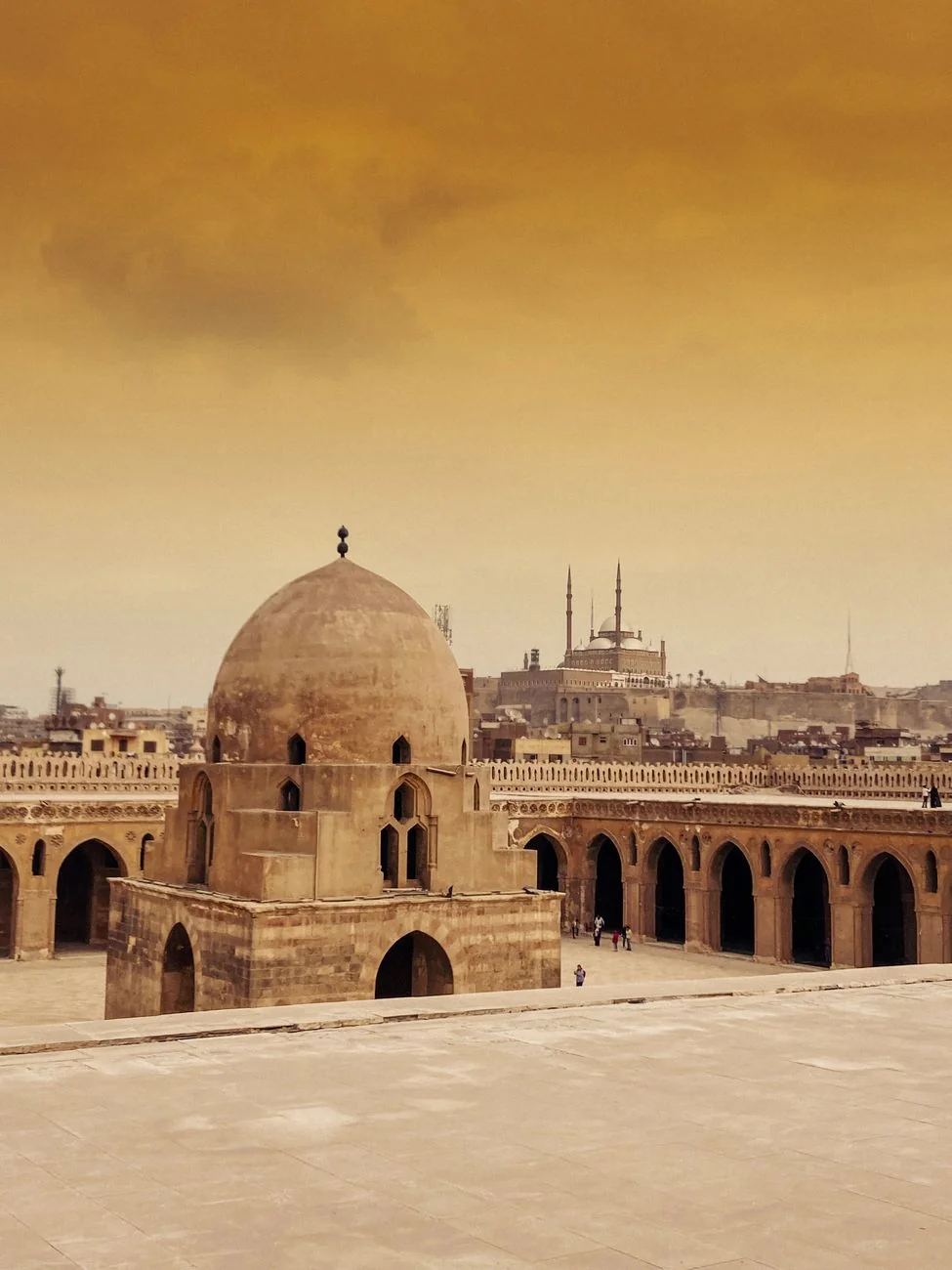
The ministry dates the mosque’s completion to 879. Its open courtyard and repeated arches make a strong first impression, so begin with the overall space before looking for smaller details. Keep the centre clear for people moving through.
Mobile data for your trip. Check what your current plan includes for roaming. If you need another option for maps, messages and booking details, compare NXTL eSIM coverage and rates. Check that your phone supports eSIM and is unlocked, and check coverage for every stop. Download important maps and confirmations for offline use too.
Notice the fountain, arches and stucco
Look for the domed fountain in the courtyard, then follow the rhythm of the surrounding arcades. Geometric and floral stucco ornament rewards closer attention at the arches and windows; compare it with the large, plain surfaces around it.
The spiral minaret is an important feature of the complex, but its presence does not guarantee access for climbing. Treat any stair or upper-level visit as optional and follow staff guidance. The courtyard and arcades make a worthwhile visit without a climb.
Step next door to the Gayer-Anderson Museum
The adjoining Gayer-Anderson Museum joins historic houses furnished with a collection spanning several cultures. After the mosque’s wide spaces, look for the rooms, screens, furnishings and the way the houses connect. The change of scale is the point of this pairing.
Check museum admission and photography arrangements separately. The ministry’s visitor guidance distinguishes personal photography, flash and tripod use; ask about the current ticket required for your equipment. Do not assume mosque entry covers the museum.
Keep lunch and the next district separate
There is no need to add the Citadel and Khan el-Khalili to make this a complete morning. After the two visits, take a meal break or return to your accommodation. For a named Downtown option, Koshary Abou Tarek provides a filling koshary lunch, reached by a separate transfer.
If the museum is unavailable or you prefer fewer interiors, spend the outing on the mosque and return early. If outdoor heat is the problem, favour the furnished-house visit where open and shorten the exposed courtyard time. Confirm both sites before committing to the journey.
Pack for steps, coverage and cool evenings
Bring shoes suited to uneven approaches, modest loose clothing, sun protection and drinking water. Follow staff instructions on footwear in the mosque. In winter, a warm layer is useful before the courtyard warms up and again on the return journey.
Keep your phone charged and save the museum and hotel addresses. Arrange a pickup landmark that a driver can identify. Avoid promising yourself a particular rooftop view: the available public areas and conditions on the day should decide the final route.
Check before you go
Opening arrangements and visitor rules can change. Check the official information before your trip.