Look up before entering
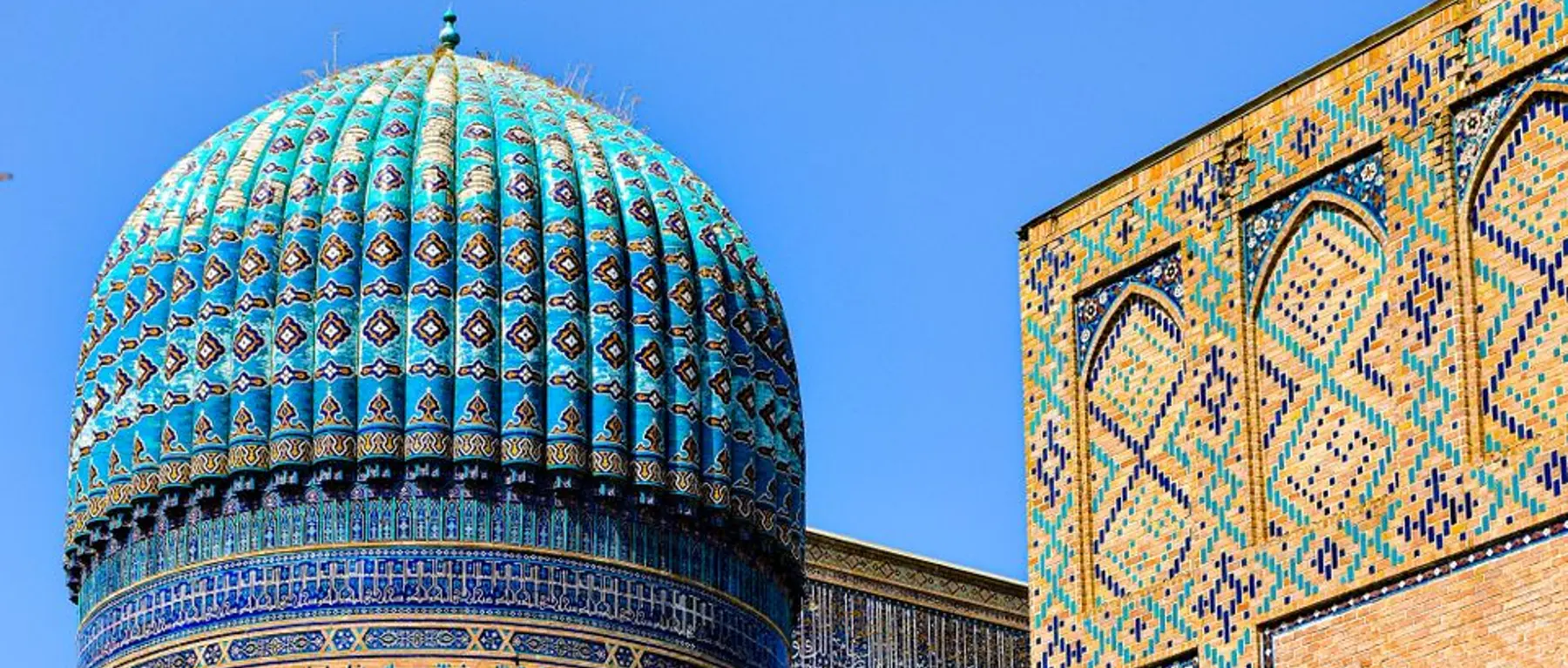
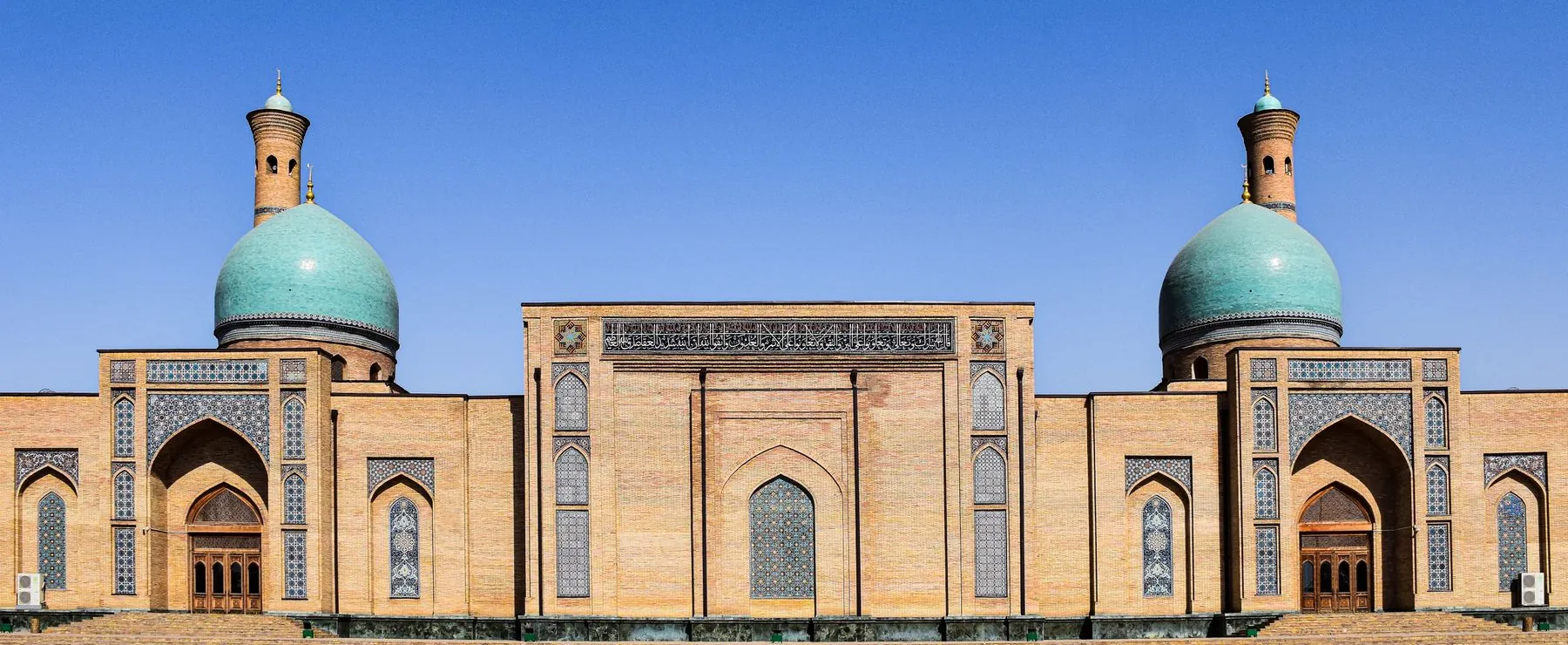
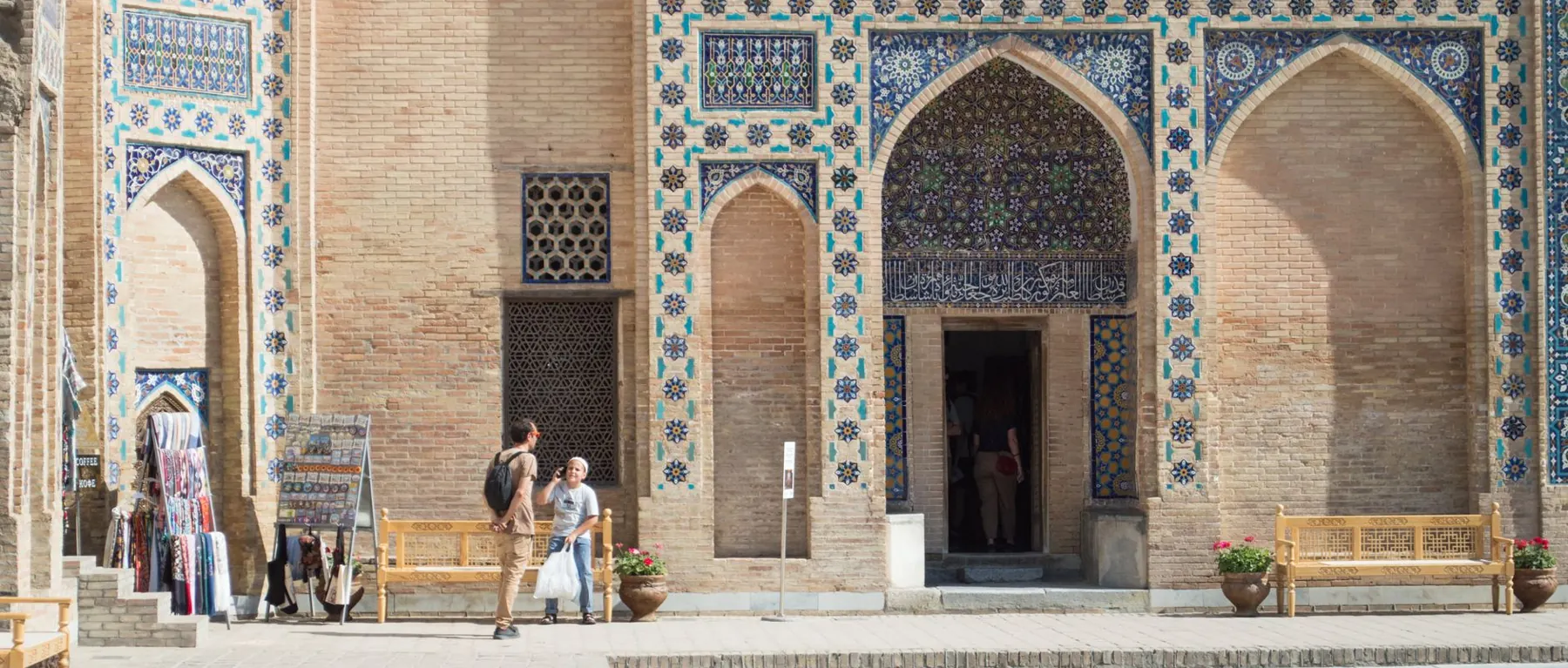
Find Gur-e-Amir Mausoleum and begin with the exterior. The dome’s ribs, patterned drum and tiled courtyard establish the scale before you move into the more enclosed interior. Look at the portal decoration from a public, permitted viewpoint rather than pressing into a busy entrance.
This is the mausoleum associated with Amir Timur and members of his family, including Ulugbek. It works well near the start of a first visit because the people commemorated here recur in the history of the city’s other monuments.
Mobile data for your trip. Check what your current plan includes for roaming. If you need another option for maps, messages and booking details, compare NXTL eSIM coverage and rates. Check that your phone supports eSIM and is unlocked, and check coverage for every stop. Download important maps and confirmations for offline use too.
Inside the decorated chamber
Buy the required admission and follow the current visitor route. Look at how the decoration climbs from the tomb markers towards the ceiling; the interior is a reason to pause rather than rush straight through for a photograph. Keep voices low and follow staff instructions about flash and restricted areas.
Do not assume the burial crypt or every part of the complex is open because the main chamber is accessible. Ask at the entrance about the areas included that day, and leave worshippers and other visitors space.
Choose a second stop that fits your energy
Continue towards Registan Square if you want a longer monument outing. Use a saved map, allow a break between the two admissions and avoid filling the same afternoon with Bibi-Khanym and Shah-i-Zinda as well unless a sustained walk suits you.
For a gentler finish, choose a public walk towards University Boulevard instead. It changes the rhythm after the mausoleum without needing another interior ticket. Follow proper crossings and check the return route before evening.
Food belongs in the plan too
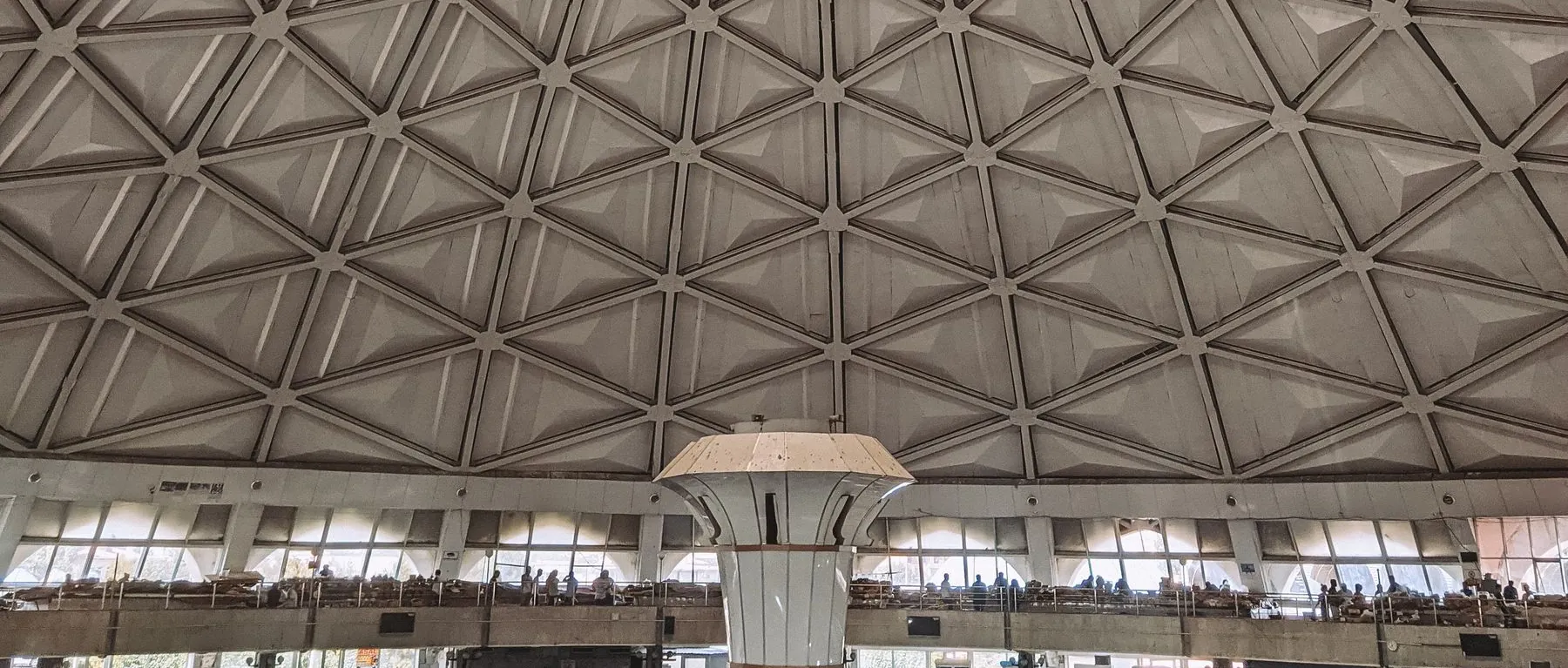
If you are continuing through Registan towards the bazaar area later, make Siyob Bazaar a deliberate food stop for non and halva. It is not beside Gur-e-Amir: allow a separate walk or transfer and sit down before moving on if needed.
Ask about ingredients and portion sizes, particularly if you avoid meat, dairy or nuts. Carry some som for small purchases and drinking water for the gaps between stops rather than relying on a particular stall being open.
Pack and check before the visit
Wear comfortable shoes and clothing covering shoulders and knees. Add sun protection in summer or a warm coat for the courtyard in winter; you may spend longer standing still than walking. A compact bag is easier to carry through the interior.
Check current admission and visitor arrangements before setting out. If the chamber is temporarily unavailable, enjoy the permitted exterior view and choose Registan or a museum as the main visit instead; do not assume a restricted door will reopen during your outing.
Check before you go
Opening arrangements and visitor rules can change. Check the official information before your trip.
- Uzbekistan Tourism — Samarkand sights, food and visitor guidance
- Registan Directorate — visitor information and official tickets
- Uzbekistan Tourism — Shakhi-Zinda memorial ensemble
- Uzbekistan Tourism — Bibi-Khanym Mosque
- Visit Samarkand — Silk Road Travel Academy local guide routes
- Samarkand Museum Reserve — Ulugbek Observatory