Look at the gate before entering
Begin outside Bab Oudaya, where the broad decorated arch gives you a different view from the small lanes inside. Stand back to see the carved bands, then move out of the way of people entering. The monumental opening is not necessarily the entrance in use: follow the open adjacent passage and any staff directions.
If you are arriving from the medina, use Rue des Consuls as a useful approach anchor rather than trusting a route that cuts through private-looking doors. Save an offline map and the position of the gate so that you can shorten the walk without getting drawn into every side lane.
Mobile data for your trip. Check what your current plan includes for roaming. If you need another option for maps, messages and booking details, compare NXTL eSIM coverage and rates. Check that your phone supports eSIM and is unlocked, and check coverage for every stop. Download important maps and confirmations for offline use too.
Walk the lanes as a residential quarter
Inside, the blue paint, white walls and small doorways are the attraction. Take the public lanes towards the river platform, noticing how the enclosed streets open suddenly into views. Steps and uneven paving make shoes with grip more useful than dress shoes.
Keep conversations quiet near homes and ask before photographing people. Do not stand in doorways for portraits or treat a closed gate as an invitation to explore. If you need a less demanding outing, stay with the main lanes and garden rather than adding every stairway.
Pause above the Bouregreg
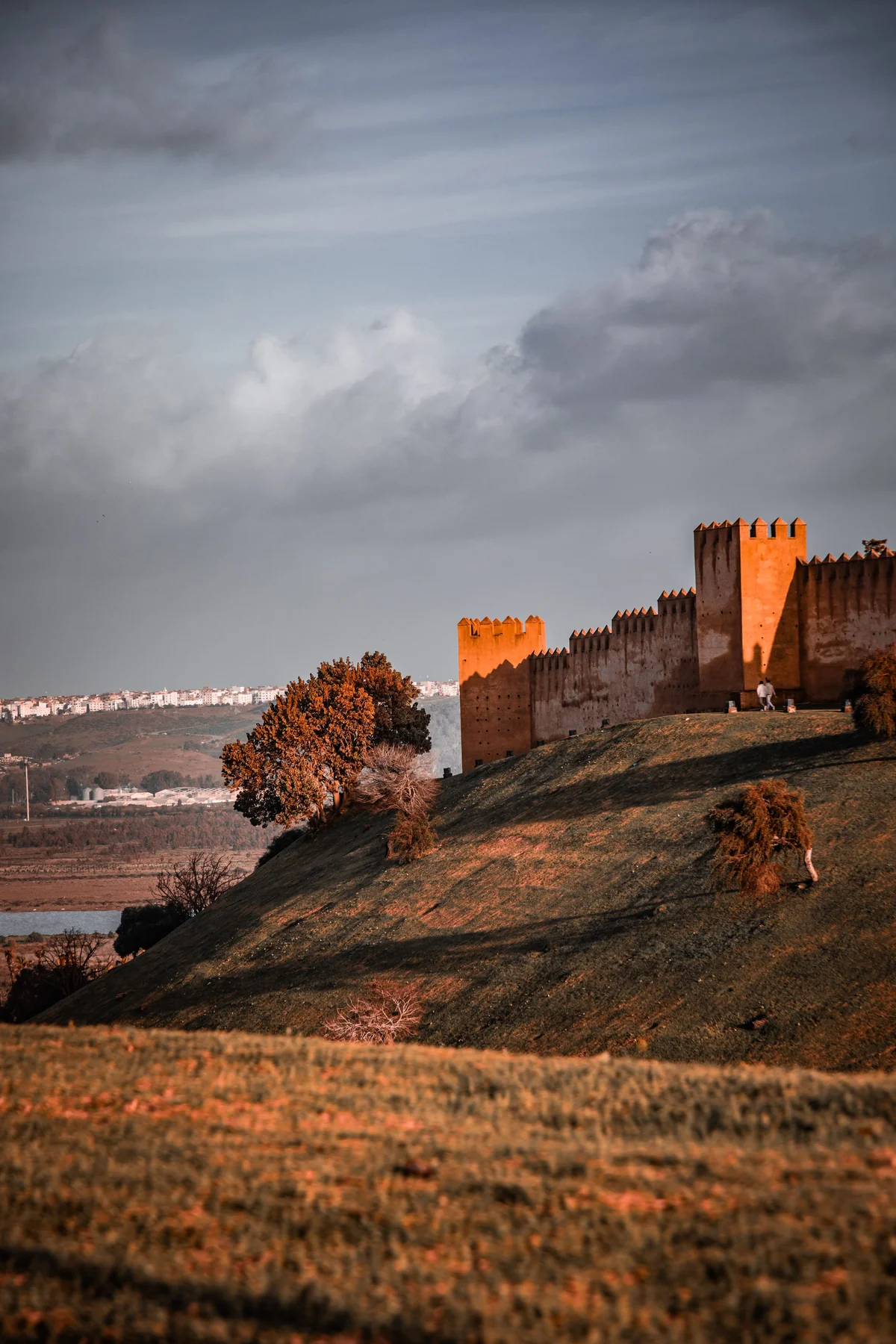
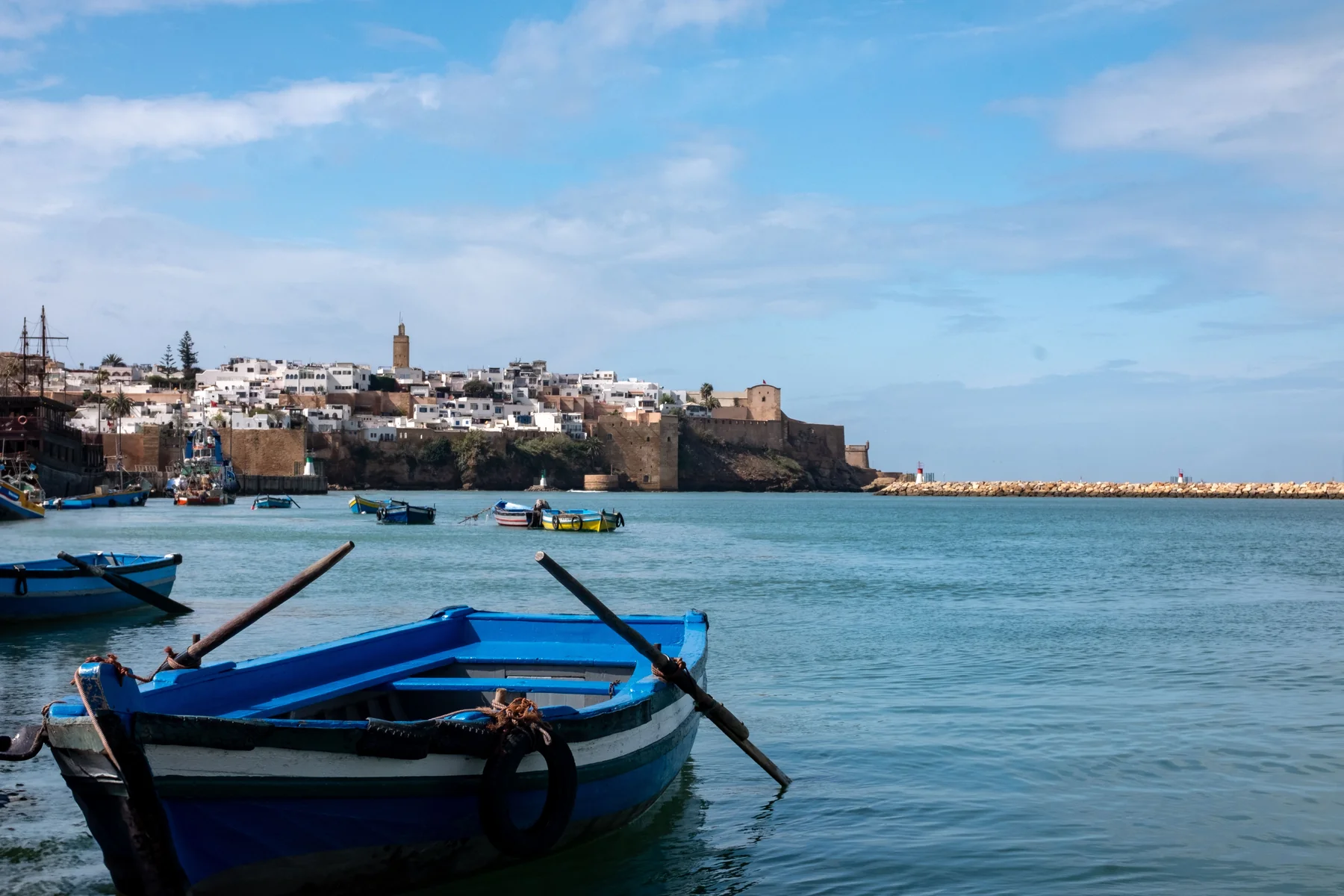
At the river viewpoint, look across towards Salé and out to the estuary. The changing width of the water and the walls below explain the kasbah’s commanding position. Hold on to hats and keep children close to protected viewing areas when the wind picks up.
This is a land-based walk. A boat crossing, beach visit or water activity is a separate decision with its own weather, equipment and operating conditions. You can enjoy the estuary view without adding one.
Finish with the garden and tea
Use the Andalusian Gardens as a slower final stop, subject to the day’s access. The enclosed planting provides a contrast to the exposed platform. The gardens and neighbourhood do not guarantee access to every nearby museum or courtyard.
Consider Café Maure for mint tea and pastries, checking what is available before ordering. Its estuary setting makes it a useful break within this walk. For a wet-weather art visit, the Mohammed VI Museum is elsewhere in the city and needs separate planning; it is regularly closed on Tuesdays.
Return while you still have energy
Return through the main lanes to Bab Oudaya, then decide whether to continue into the medina or finish. Carry drinking water, a secure small bag and a light wind layer. Keep a rain shell in the cooler months: shelter in a café is more comfortable than making the viewpoint compulsory during a shower.
Check before you go
Opening arrangements and visitor rules can change. Check the official information before your trip.