Find the building from the correct station
Begin with the access directions for your arrival station: JR Osaka, Hankyu Osaka-Umeda and Osaka Metro Umeda have different exits. Save Umeda Sky Building as the actual destination rather than searching only for Umeda. The station area is large enough that the first northbound sign may not be your simplest route.
Use the operator’s current approach map and street crossings, particularly while the surrounding district changes. Allow a buffer between arriving by train and a timed booking. Visitors using a wheelchair or pushchair should follow the dedicated access guidance rather than assuming the stair-based pedestrian route will work.
Mobile data for your trip. Check what your current plan includes for roaming. If you need another option for maps, messages and booking details, compare NXTL eSIM coverage and rates. Check that your phone supports eSIM and is unlocked, and check coverage for every stop. Download important maps and confirmations for offline use too.
Look up before going inside
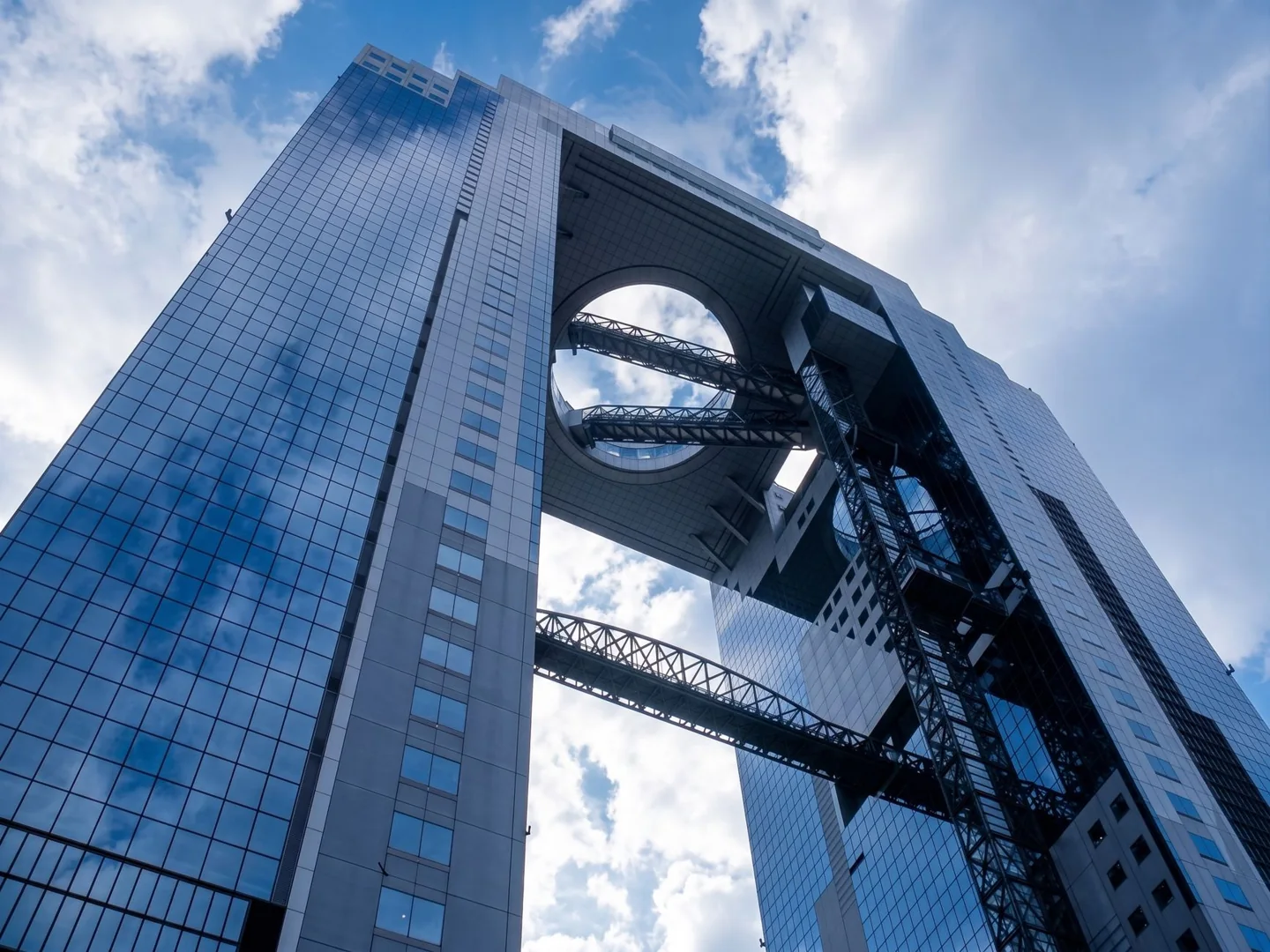
Pause outside to see how the two towers connect around the circular opening overhead. It is a worthwhile architectural view even if you decide against paid observation admission. Keep to public routes and avoid standing in a vehicle or building entrance while framing a photograph.
If the skyline is hidden by cloud, decide whether the building and indoor experience still interest you before buying. The photographs on a ticket page illustrate a possibility, not the visibility on your visit. Leave another clear-weather opportunity open if a distant panorama is the main reason for going.
Understand the indoor and rooftop areas
Kuchu Teien Observatory occupies the connecting upper levels and the open rooftop. The approach includes elevators and the distinctive enclosed escalator section; follow the signed visitor route. Give yourself time to look in several directions rather than racing immediately to a single sunset photograph.
The operator states that the rooftop may close in heavy rain. Indoor admission does not make the outside deck available in all conditions. Check notices before setting off and ask staff if access is uncertain. The building also contains offices and other businesses, which are not part of a sightseeing ticket.
Check the pass and ticket scope
If using an Osaka Amazing Pass or Osaka e-Pass, read the observatory’s current admission window. The operator’s English guidance distinguishes the earlier free-entry window from later discounted admission. Do not build a sunset plan around an assumption that every pass gives free access throughout the evening.
Separate museums, restaurants and special products can have their own admission or booking arrangements. Compare the ticket you actually want with any bundle before purchasing. A restaurant reservation does not automatically provide observatory entry, and an observatory ticket does not reserve a window table.
Take a café break and keep an easy exit
We recommend café SKY 40 inside the observation area for a coffee break during a paid visit. Its location lets you pause between views without adding another cross-city journey. Check the current menu and seat availability; refreshments are a separate purchase and a particular view is not guaranteed.
The building’s Takimikoji area offers another browsing and dining possibility at lower levels, with individual shop schedules. Keep it optional if you already have a meal planned elsewhere. Before leaving, check the station and railway for your return: JR Osaka and the several Umeda stations are not one interchangeable boarding point.
Pack for the exposed part of the visit
Bring a removable layer for the rooftop in cool weather and keep your belongings secure around other visitors. Comfortable shoes help with the station approach as well as time spent standing at the view. Carry a charged phone for the route back and keep your ticket easy to retrieve.
On a wet day, shorten the exterior approach and use a confirmed indoor visit or meal if the rooftop is unavailable. Follow staff instructions and transport alerts during severe weather. Leave enough time for the return journey rather than assuming that a late observatory closing time also describes the last train you need.
Check before you go
Opening arrangements and visitor rules can change. Check the official information before your trip.