Start at the shrine rather than the summit
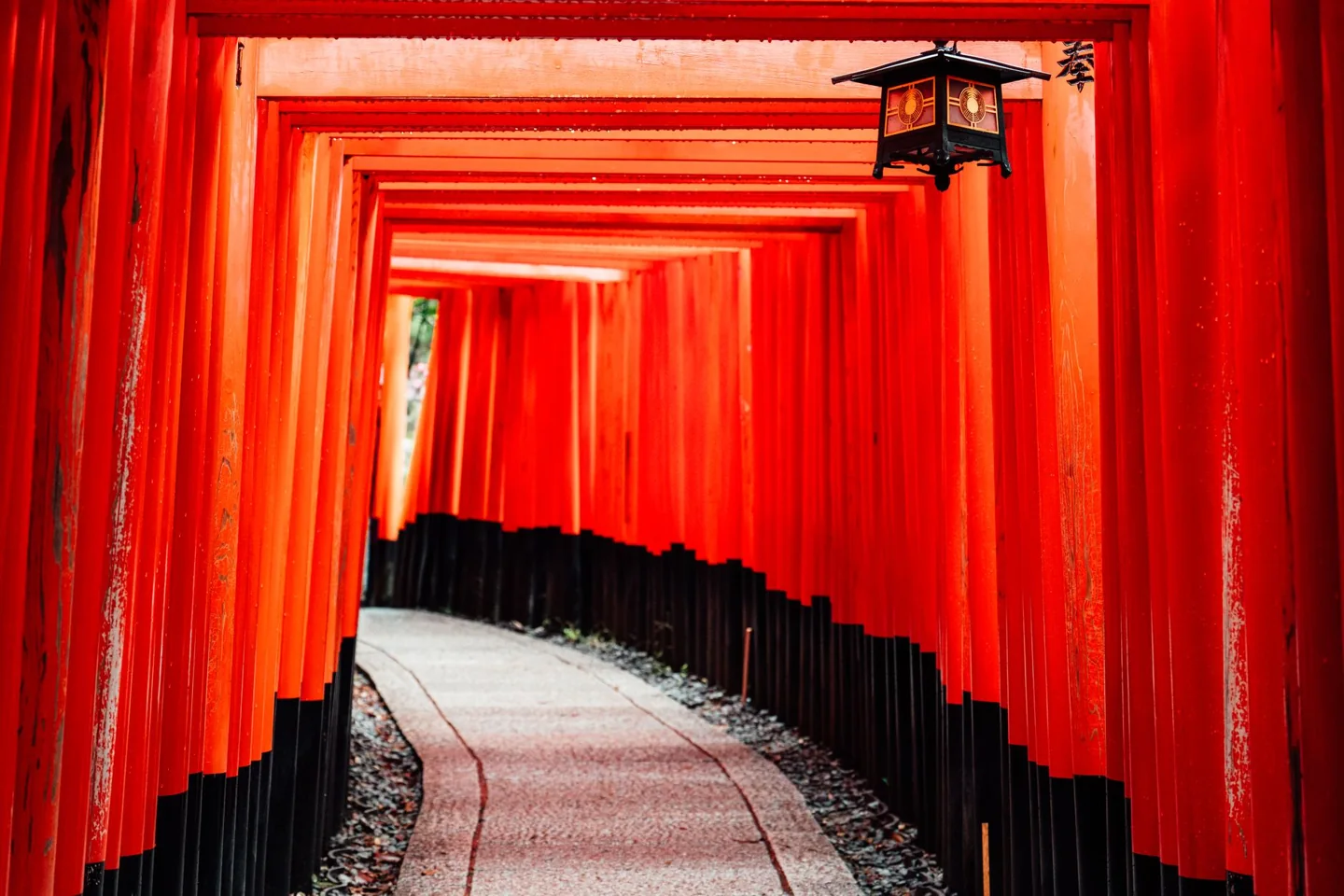
Make Fushimi Inari Taisha the reason for the outing, with time for the lower shrine buildings before heading into the torii paths. Look for fox figures and the contrast between open courtyards and closely spaced vermilion gates. These are religious grounds, so leave worshippers space and follow the shrine’s signs.
The lower visit can stand on its own. You do not need to finish the mountain circuit to appreciate the shrine, and a short walk through the gates is a better choice than pushing uphill when someone is already tired.
Mobile data for your trip. Check what your current plan includes for roaming. If you need another option for maps, messages and booking details, compare NXTL eSIM coverage and rates. Check that your phone supports eSIM and is unlocked, and check coverage for every stop. Download important maps and confirmations for offline use too.
Choose the correct railway station
JR Inari Station and Keihan Fushimi-inari Station serve the area but are on different networks. Choose the journey from your actual accommodation and save the return station name. Kyoto’s municipal subway and bus pass is not a universal ticket for either railway.
Use the official shrine access guidance and Kyoto’s route planner to decide your approach. Leave large bags at your accommodation or an appropriate luggage facility. Moving through the shrine and stepped paths is much easier when your day bag contains only what you need.
Walk the torii paths at your own pace
Continue from the main grounds into the covered sequences of gates, watching for oncoming walkers and junctions. Stop to look at the inscriptions without blocking the path. A photograph of an empty passage is not a realistic reason to hold up visitors behind you.
Decide on a turnaround point based on the weather, daylight and the group’s footing. The mountain paths involve steps; do not interpret the lower shrine’s easy arrival as proof that the complete route is step-free. Stay on marked visitor paths and respect any temporary barriers.
Make the longer climb an optional outing
For a longer walk, consult the shrine’s map before continuing towards the upper routes. Carry water and allow for the return descent. Do not add a fixed-time lunch booking far away if you want the freedom to stop or turn back.
In hot, humid weather, keep the climb short and use proper cooling breaks. Wet weather can make stone surfaces slippery; footwear and visibility matter more than reaching an arbitrary checkpoint. Follow warnings and closures rather than treating every marked path as available in all conditions.
Return to Gion for a seated meal
If you are travelling back towards Gion, we recommend a separate meal at Matsuba. Its nishin soba gives you a clear food idea after the shrine, and the location by Minamiza suits an arrival around Gion-Shijo. This requires another rail journey; it is not beside the torii gates.
Check opening arrangements before making the meal part of your day, and ask about fish, wheat and other ingredients. Keep a shorter local meal as an alternative if the walk runs late. There is no need to add Arashiyama to the same outing just to fill the afternoon.
Pack for the lower route or the hill
Wear shoes with grip and carry a small bag, water and rain protection. Summer needs a sun hat and breathable clothing; winter needs a warm layer for pauses. Keep your phone charged for the route and return journey.
Save the shrine map and station details before setting off, while remembering that downloaded information cannot show a newly closed path. Check current signs on arrival and finish while everyone still has enough energy for the descent and journey back.
Check before you go
Opening arrangements and visitor rules can change. Check the official information before your trip.