Find the palace within the city
Enter through the Golden Gate and follow the main lane towards the Peristyle. Look back at the gateway before continuing: this makes the transition from defensive boundary to ceremonial centre easier to read. Use the public street walk to get your bearings before buying several interiors.
Mobile data for your trip. Check what your current plan includes for roaming. If you need another option for maps, messages and booking details, compare NXTL eSIM coverage and rates. Check that your phone supports eSIM and is unlocked, and check coverage for every stop. Download important maps and confirmations for offline use too.
For a booked alternative, compare the Split city and palace-area walk. Choose the city route rather than Trogir or longer variants. Cathedral, tower and cellar admission and any food or wine tasting depend on the option; exterior interpretation does not establish entry.
Look at what the columns frame
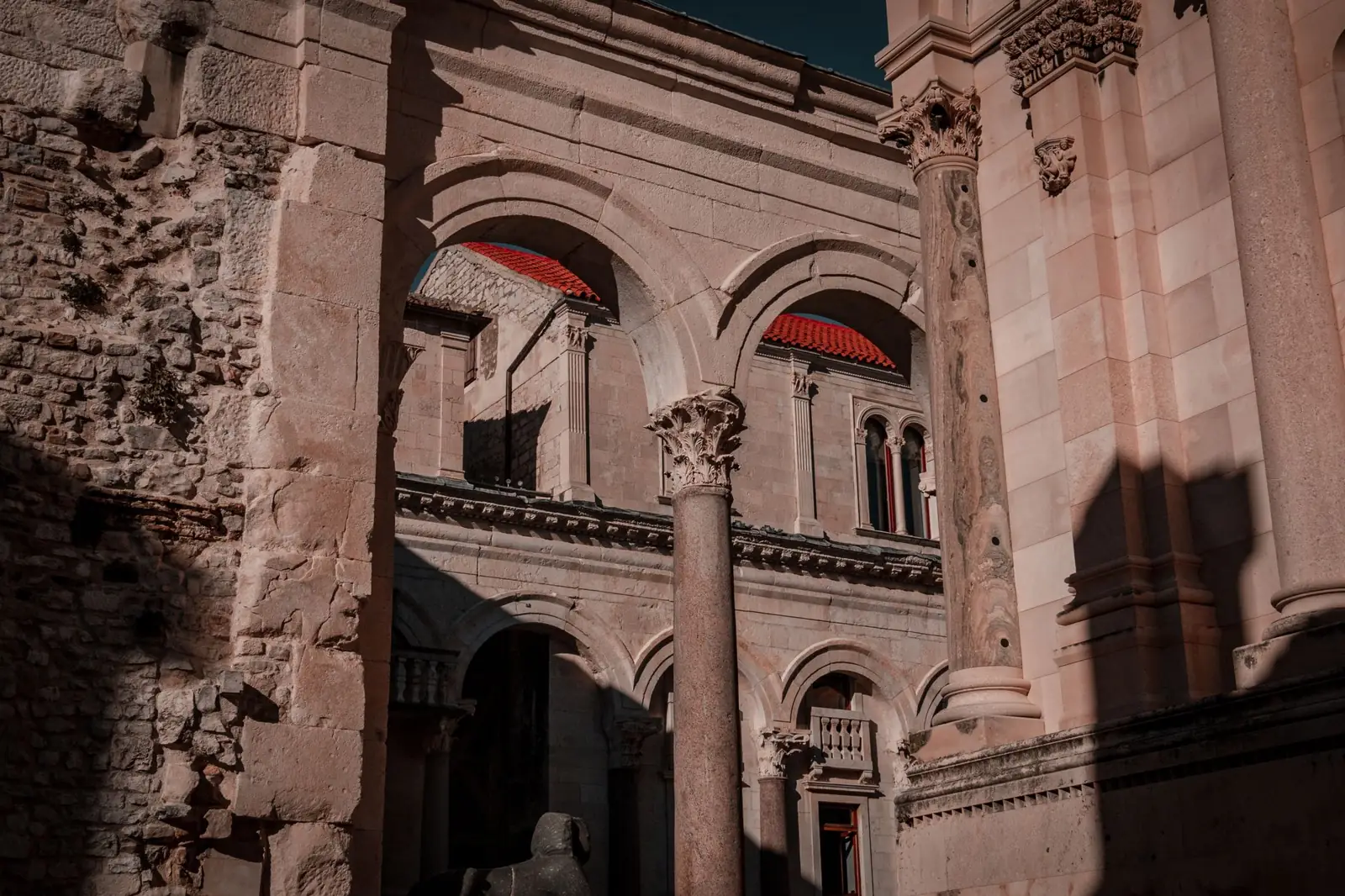
At the Peristyle, compare the red granite columns with the buildings fitted around them. Stand clear of café seating and the route into the church. This is a good place for a short architectural pause: notice where later houses lean on older stonework rather than treating the entire district as a single untouched Roman building.
Choose the cathedral for detail, the tower for a view
The cathedral occupies Diocletian’s former mausoleum. If you prefer craftsmanship to a climb, focus on its carved wooden doors and circular interior. For the tower, consider your comfort with stairs and height before paying. Ask the ticket desk which areas are included in the current combination; do not assume a palace walking-tour fee covers any of them. Allow worshippers space and plan around services.
Keep the cellars as a separate decision
The palace cellars are another worthwhile visit when you want to understand the structure supporting the residence. Check the museum’s current entrance and exhibition ticket arrangements before entering paid halls; walking a passage does not mean you have toured every cellar. If time is short, choose the cathedral or cellars and save the other for another day.
A useful pause within the palace
We recommend Uje Oil Bar for a separately reserved olive-oil tasting if you want a food stop with a subject, rather than another hurried photograph. Compare aromas and flavours under the venue’s guidance, then return to the lanes. The operator offers dedicated tasting bookings and notes two entrance steps, so discuss access beforehand. In rain, shorten the street loop and give your chosen interior more time.
Check before you go
Opening arrangements and visitor rules can change. Check the official information before your trip.