Start with the square rather than a long checklist
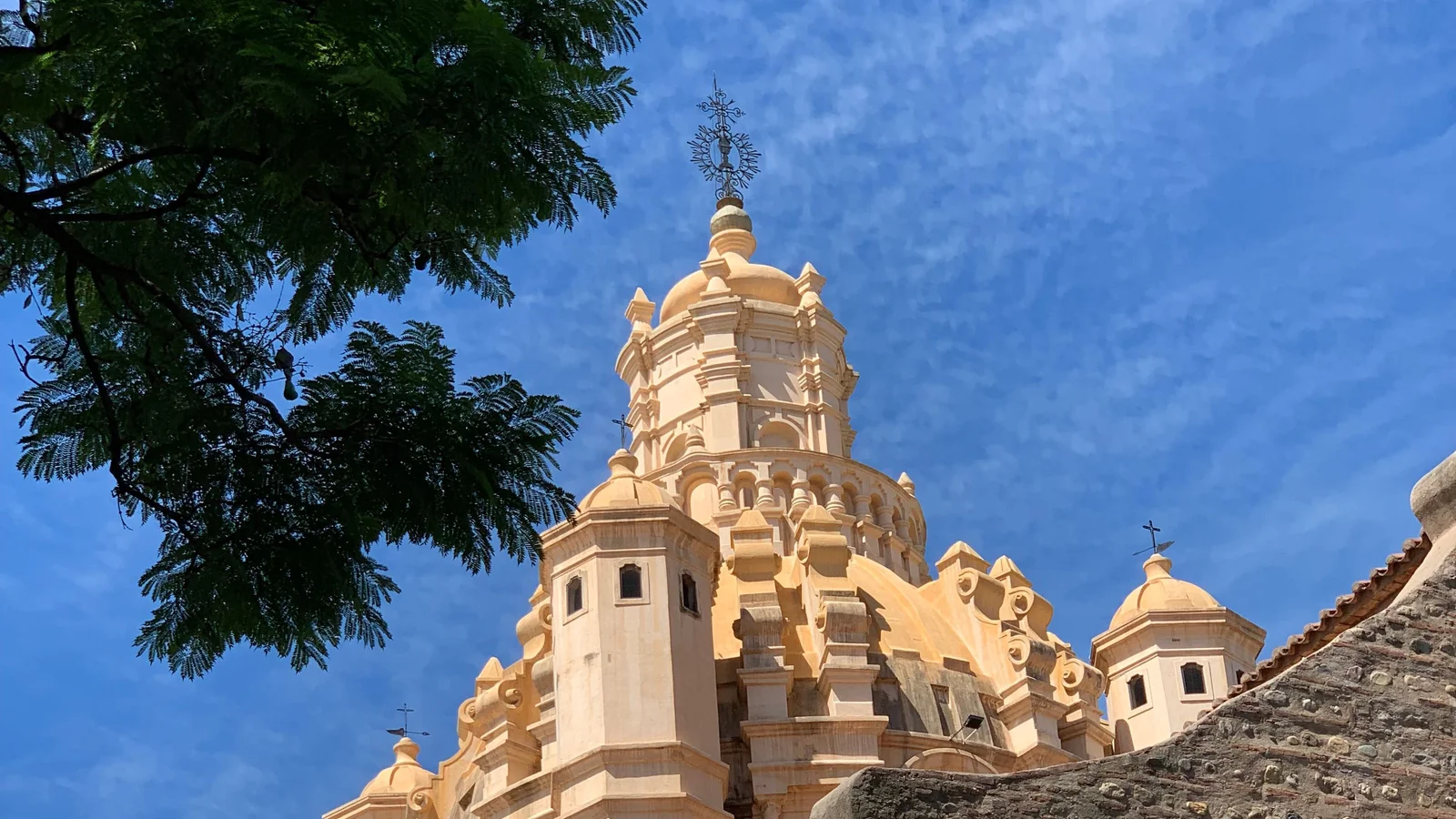
Begin on Plaza San Martín and take a moment to see how the Cathedral and Cabildo sit beside each other. This compact historic core is a useful first outing: you can follow the relationship between the buildings without committing to a distant neighbourhood or a full day of transport. Look up at the Cathedral from a safe place in the square, with the dome as your main visual anchor.
Keep the open-air part flexible in summer heat or a shower. The route works as a short visit, and a comfortable pause is more useful than adding several interiors simply because they are close. Use marked crossings around the square and keep phones and bags secure in busy pedestrian areas.
Look from the Cathedral toward the Cabildo
Approach the Cathedral side of the square, then compare its religious architecture with the long arcaded frontage of the Cabildo. The Cathedral stands at Independencia 64. If you want to enter, check the church’s current visitor information and give services priority; an exterior visit does not guarantee access to every part of a working church.
The Cabildo offers a different perspective when its visitor areas are open. The municipality describes two courtyards and a view of the Cathedral dome from the first floor of the main patio. Ask about current access before heading upstairs. The courtyard is an optional addition, so the walk still works if an event or visitor arrangement keeps that area unavailable.
Use Pasaje Santa Catalina to understand the space between
Continue to Pasaje Santa Catalina between the Cathedral and Cabildo. Its position makes the distinction between the historic religious and civic buildings easy to read on the ground. Rather than treating it only as a shortcut, stop where there is room to notice the walls, the change in scale and the view back toward the square.
The passage leads toward the church and convent of Santa Catalina. Keep this part focused on the public route and exterior unless you have checked a specific visitor opportunity. It is a useful small extension to the square, without assuming that a convent or a religious interior functions as an all-day walk-in attraction.
Make the café pause fit the route
Return to the square’s Buenos Aires and San Jerónimo corner for Oriental Plaza, at Buenos Aires 106. We recommend it as a practical coffee pause beside the route: you can sit down near the historic buildings rather than detour across the city for a break. The venue also advertises changing executive lunch options if your outing runs into lunchtime.
This is Oriental Plaza, the café on the corner, rather than the relocated Sorocabana. Keep the two businesses distinct when finding your stop. The current venue pages list Sunday closure; check before travelling and bring water so the route does not depend on finding a particular table or café open.
Mobile data for your trip. Check what your current plan includes for roaming. If you need another option for maps, messages and booking details, compare NXTL eSIM coverage and rates. Check that your phone supports eSIM and is unlocked, and check coverage for every stop. Download important maps and confirmations for offline use too.
Choose a guided alternative for the wider historic story
A guided walk makes sense if you want more historical context and a wider set of stops. Use it instead of repeating this whole route independently, and allow time for its full itinerary rather than treating it as a quick add-on after a long morning on foot.
The matched option begins at Plaza San Martín, includes the Cathedral and Cabildo area, and continues through other historic sites toward Patio Olmos. Its museum-related stops do not mean museum admission is included. Read the actual departure language, meeting instructions and current route before booking.
For a guided alternative through the historic centre, consider the La Docta “Córdoba La Antigua” walking tour. The listing describes about two and a half hours with a local guide, with English and Spanish departures to check for your date. It is a pay-what-you-decide tour with a booking deposit, rather than an entirely free activity; museum admission is excluded.
Keep clothing and the return journey simple
Wear comfortable walking shoes and bring a removable layer. Summer afternoons can be hot and wetter; winter mornings and evenings are much cooler. A water bottle, sun protection and compact rain cover are useful for the exposed square, while covered shoulders and knees make a planned religious interior easier to accommodate respectfully.
For a bus return, use the official Tu Bondi planner to check the route and estimated arrival. Planning does not pay the fare: follow the municipality’s current SUBE and contactless-payment guidance and carry a backup. End the outing while you still have time for a calm journey back, rather than adding a distant stop without checking the connection.
Check before you go
Opening arrangements and visitor rules can change. Check the official information before your trip.
- Municipal tourism — historic-centre circuit
- Córdoba Cathedral — official architecture and location
- Municipal heritage — Cabildo courtyards and Cathedral view
- Municipal tourism — Pasaje Santa Catalina
- Oriental — current venue address, café and lunch information
- Grupo Oriental — current branches and visitor guidance
- Circuito Gastronómico — locally written guide to Oriental Plaza
- Tu Bondi — official city bus planner and downloads
- Municipality — city bus payment and SUBE