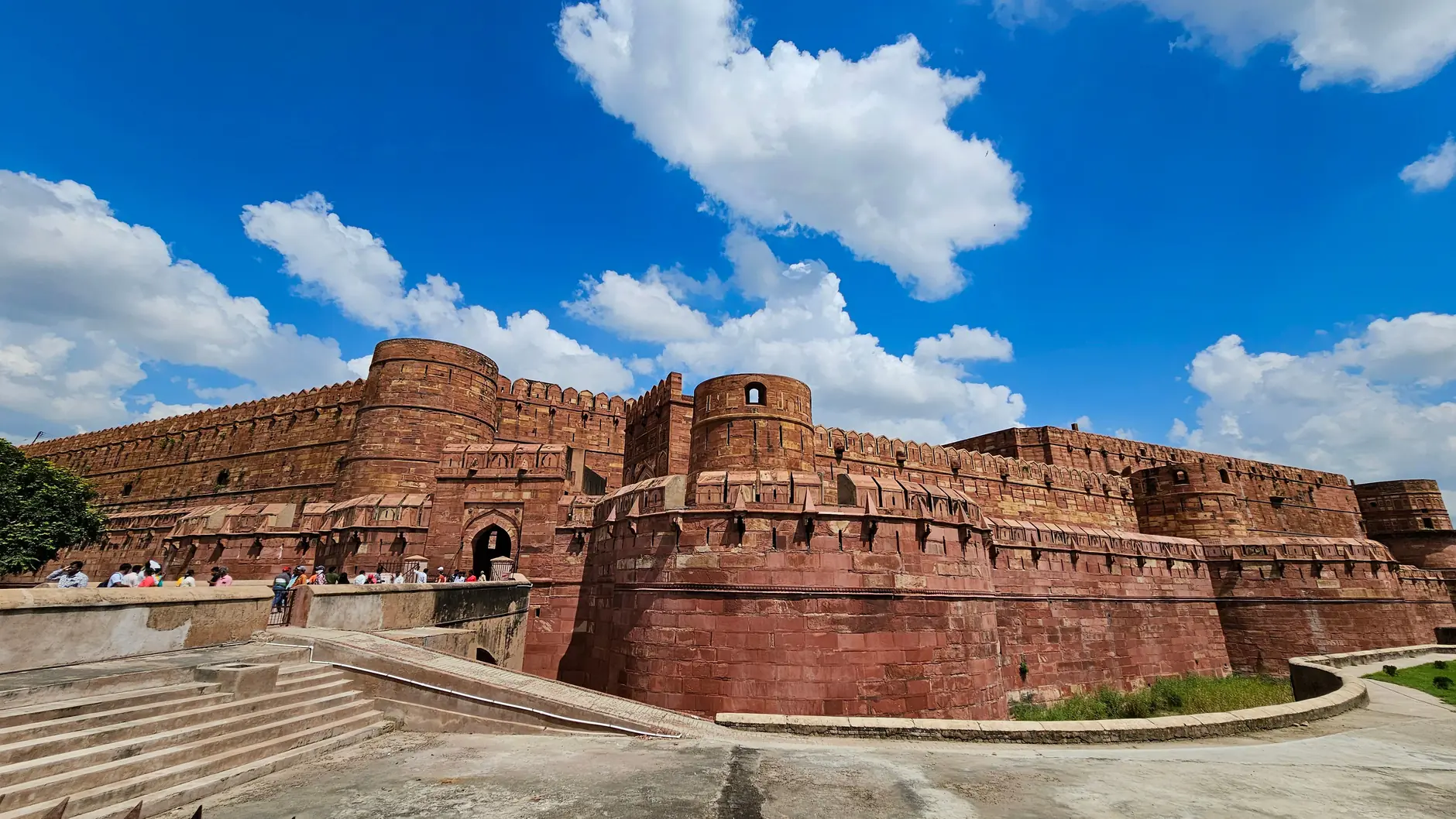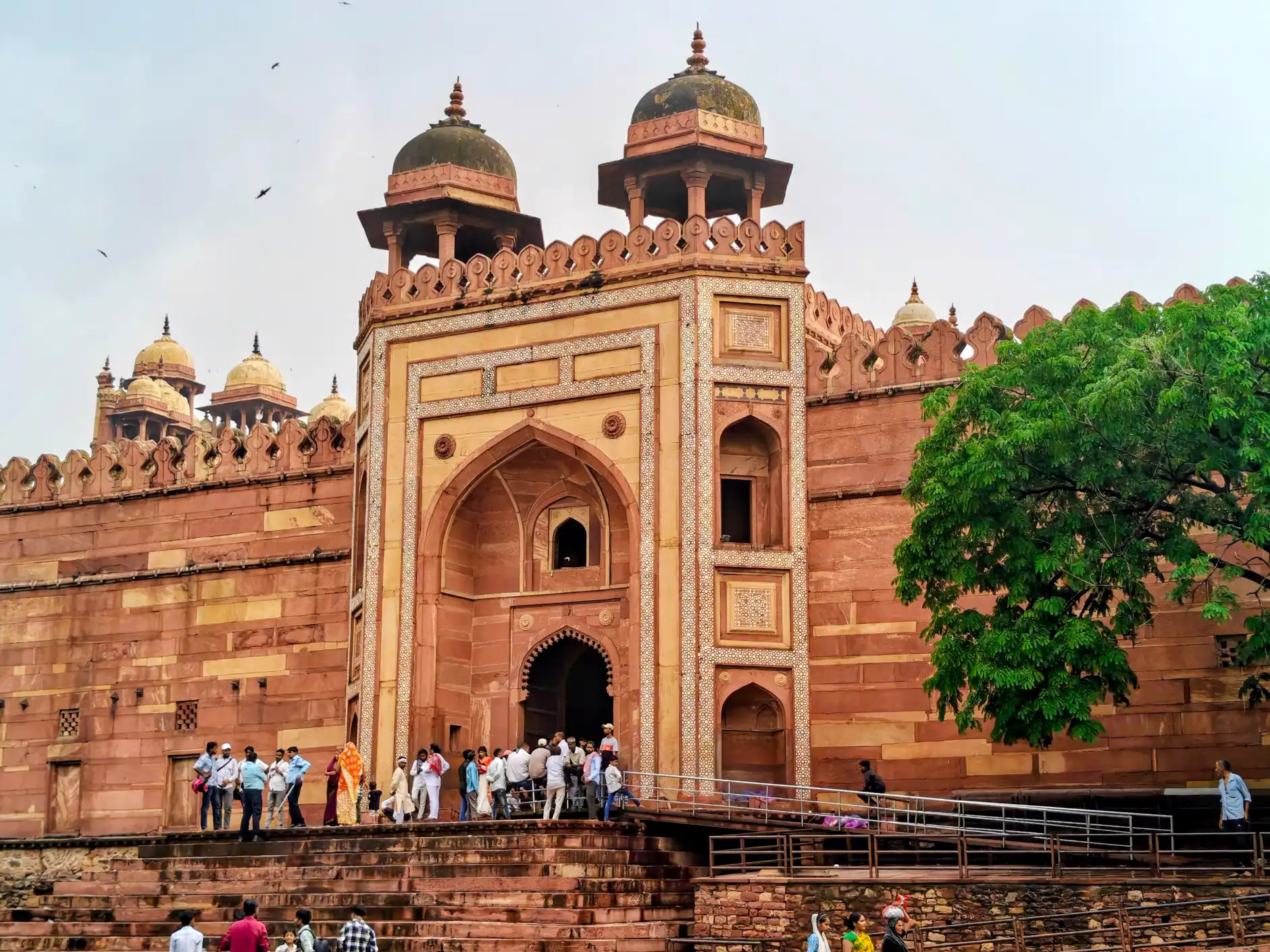
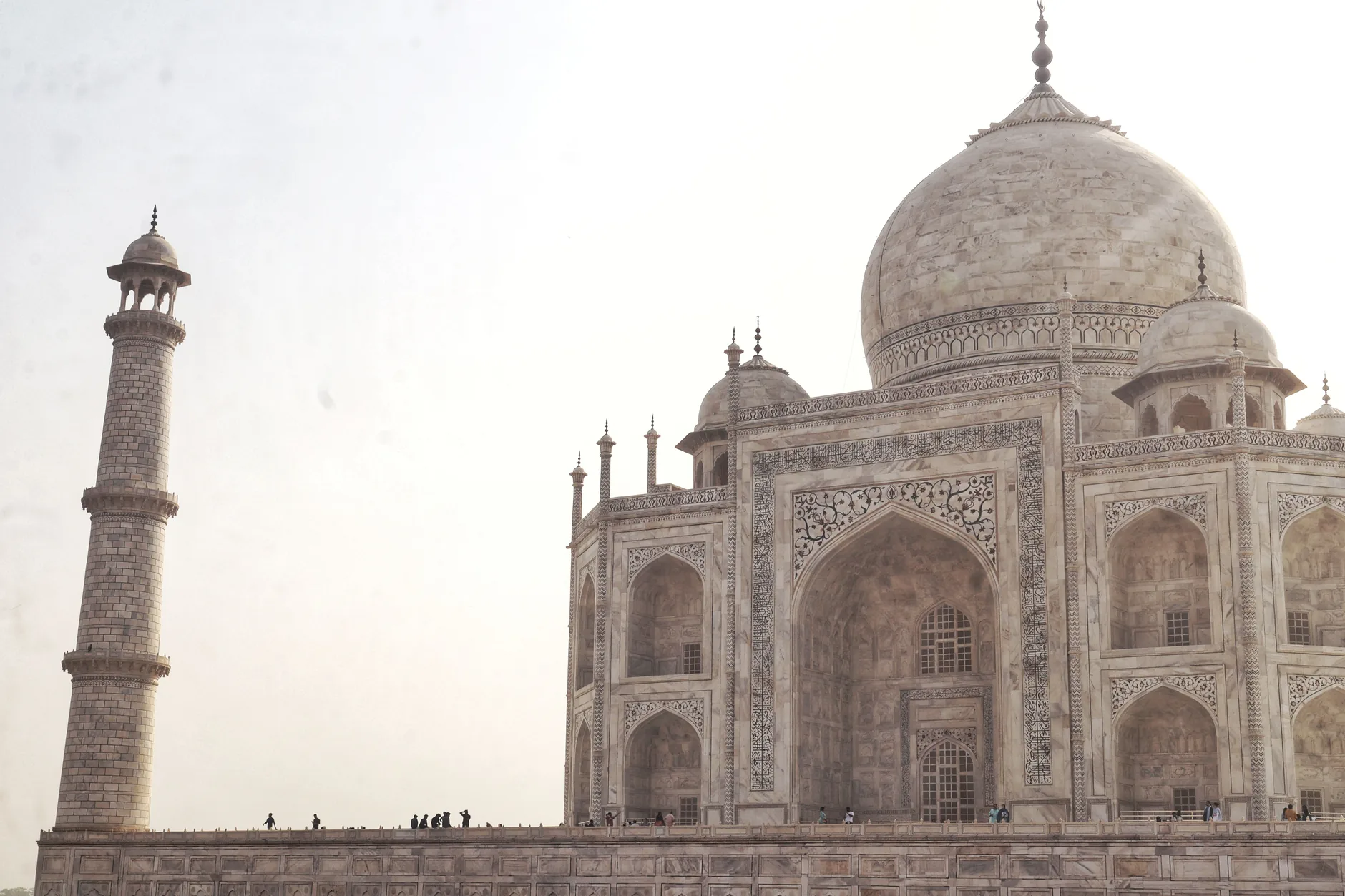
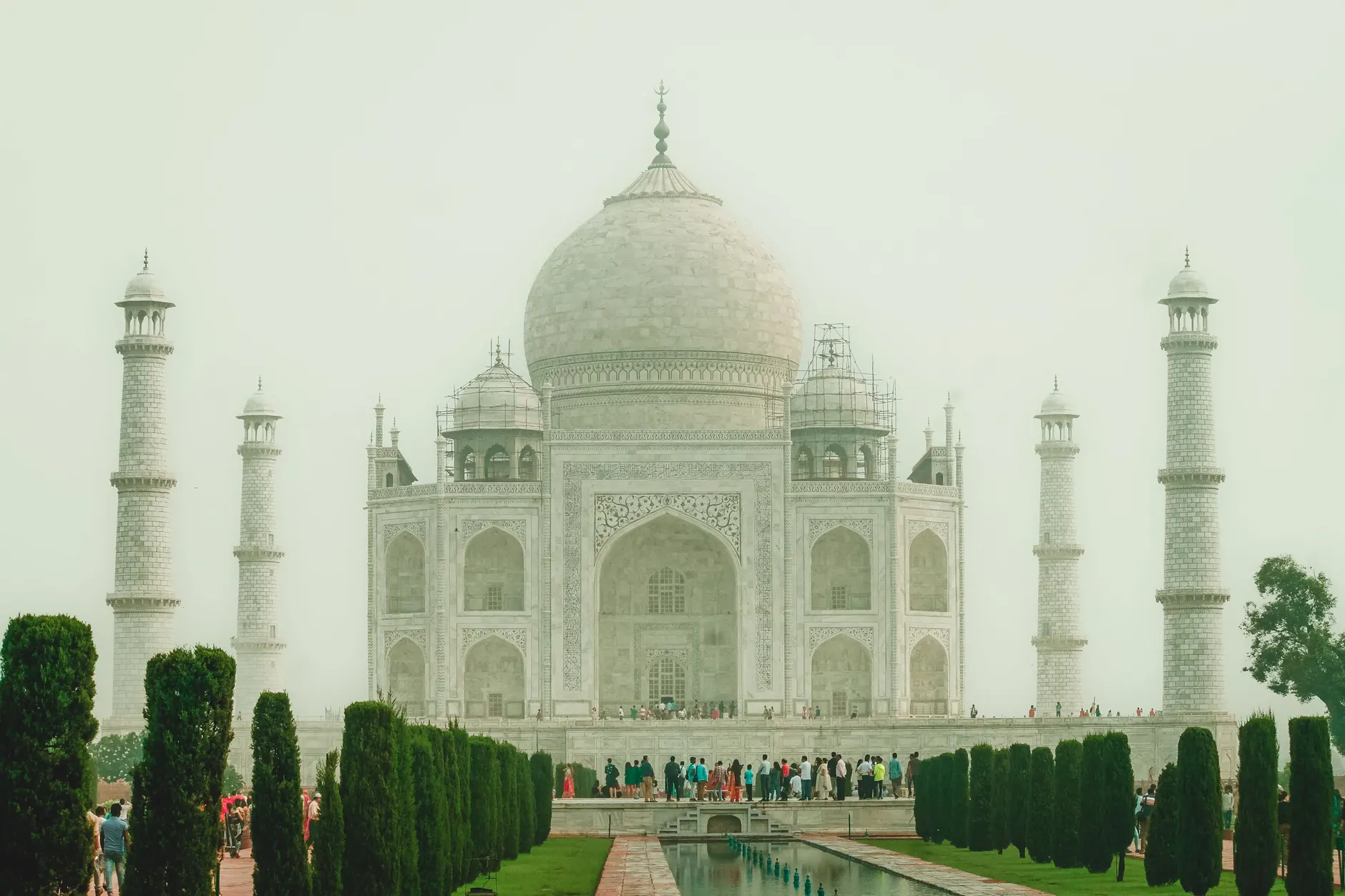
The Taj Mahal’s white marble dome and minarets rise above Agra on a clear day
India · Destination guide
Agra, India
CurrencyIndian rupee (INR)
Plug typesD, M · 230 VCheck adapter →
Time zoneAsia/Kolkata (UTC+5:30)
Emergency number112
Destination guide

A first look at Agra

Start at the Taj Mahal when it opens, then visit Agra Fort through Amar Singh Gate to follow its red sandstone ramparts into Shah Jahan’s marble pavilions. We recommend Deviram Sweets at Pratap Pura for a morning bedai with potato sabzi and jalebi, a classic local breakfast described by Agra food writers; confirm the branch and current service before setting out. On a separate north-bank outing, pair Itimad-ud-Daulah with Chini ka Rauza and Ram Bagh. Reserve a half-day road journey for Fatehpur Sikri. Agra Metro’s open priority stretch is useful between Taj East Gate and Mankameshwar, but autos or a prearranged car cover gaps between monuments.

Explore our Agra guides

Weather guide

Weather in Agra

Winter mornings can be cool and hazy, spring heats up quickly, and May and June are intensely hot. The monsoon brings frequent rain and showers in July and August. Check the forecast and air quality before long outdoor visits.

33–37°C

Warm days with cooler mornings

October · representative month, not a forecast
Evenings
16–20°C
Rain
Occasional showers possible
Daylight
Check current visitor hours and leave time for security and road transfers.
See weather details →

What this means for packing

Use the milder spell for the Itimad-ud-Daulah and Chini ka Rauza circuit, with water for sunny paths. This example is a starting point. Download Packtricia for a detailed personal list based on your actual dates, trip length, luggage, preferences and plans.

Choosing a season

The best-season badge suggests months for general sightseeing, using the typical daytime temperatures and rainfall in our monthly guides. Beach holidays, festivals, winter sports and northern lights trips may suit different dates.

Climate methodology

Indicative October packing bands extend about 2°C either side of rounded mean daily maximum and minimum temperatures in IMD’s Agra 1981–2002 climatological table. They are planning bands, not forecasts or extremes. Monthly mean rainfall and rainy-day counts inform the compact rain description; check your actual dates and current alerts.

Reviewed 2026-10-24

IMD — Agra climatological table, 1981–2002 · District Agra — monument visitor information

About the climate in Agra

Winter mornings can be cool and hazy, spring heats up quickly, and May and June are intensely hot. The monsoon brings frequent rain and showers in July and August. Check the forecast and air quality before long outdoor visits.

Packing guide

What to wear in Agra in July.

An example packing list for Agra in July

Use this as a starting point and choose what suits your plans. Packtricia tailors your list and quantities to your trip length, weather and preferences.

Clothing

  • Underwear
  • Bras (if worn)
  • Socks
  • Sleepwear
  • Quick-drying tops and light trousers
  • Shoulder-covering top
  • Comfortable grippy walking shoes
  • Packable rain jacket
  • Knee-covering bottoms for religious sites

Toiletries

  • Toothbrush
  • Toothpaste
  • Shampoo
  • Conditioner
  • Body wash or soap
  • Deodorant
  • Sunscreen
  • Personal hygiene products (if used)
  • Insect repellent (if needed)

Essentials

  • Passport
  • Visa or ETA (if required)
  • Travel tickets and booking confirmations
  • Wallet and payment cards
  • Cash in Indian rupees
  • Phone
  • Charging cable and charger
  • Power bank
  • Travel adapter (if needed)
  • Medication (if needed)
  • Glasses (if used)
  • Reusable water bottle
  • Compact umbrella and packable rain layer
  • Head covering (if visiting a site that requires it)
Monthly weather and packing notes

Use a rain layer and grippy shoes around Agra Fort; showers can disrupt road transfers. This example is a starting point. Download Packtricia for a detailed personal list based on your actual dates, trip length, luggage, preferences and plans.

Daytime
34–38°C
Evenings
23–27°C
Rain
Frequent rain and showers
Daylight
Check current visitor hours and leave time for security and road transfers.
Packing style
Light quick-drying clothes, grippy shoes and rain protection

Indicative July packing bands extend about 2°C either side of rounded mean daily maximum and minimum temperatures in IMD’s Agra 1981–2002 climatological table. They are planning bands, not forecasts or extremes. Monthly mean rainfall and rainy-day counts inform the compact rain description; check your actual dates and current alerts.

Outfit ideas for your outings

July Taj Mahal garden walk

  • Comfortable top
  • Long trousers
  • Grippy walking shoes
  • Packable rain layer

Fort and religious-site visit

  • Shoulder-covering top
  • Knee-covering trousers or skirt
  • Shoes easy to remove where requested
  • Small secure day bag

Metro, auto and meal break

  • Comfortable outfit
  • Charged phone and power bank
  • Compact umbrella or rain layer

What to leave behind

  • Clothes suited only to a beach holiday: monument and religious-site visits call for covered shoulders and knees.
  • Heavy expedition boots for ordinary city paths: comfortable grippy walking shoes are more useful.
  • A tight schedule that treats Fatehpur Sikri as a quick city-centre stop: it requires a separate road journey.

Reviewed 2026-10-24

IMD — Agra climatological table, 1981–2002 · District Agra — monument visitor information

Transport guide

Getting around Agra

Agra Metro currently serves its six-station priority stretch between Taj East Gate and Mankameshwar, via Captain Shubham Gupta, Fatehabad Road, Taj Mahal and Agra Fort. Use the official Agra Metro app for the line map and QR single-journey or group tickets; the current app listing says its journey planner was removed, so check station signage or the operator’s live guidance for routes. A route map is not a ticket: buy and scan the QR for the journey, and check the active stations before relying on the Metro for early or late monument access. The line does not reach Akbar’s Tomb or Fatehpur Sikri. Use an auto-rickshaw or prearranged car for the north-bank tombs and outlying sights; District Agra lists buses from ISBT/Idgah toward Fatehpur Sikri. City Metro tickets do not cover those road or bus legs. No independent route planner with verified Agra coverage was established.

Check the operator’s current service notices and ticket instructions before travelling.

Entry guide

Entry information for India

Check India’s official e-Visa portal for your nationality, passport and arrival point before booking. Keep your passport, visa or ETA if required, and accommodation details available offline; recheck current arrival requirements with India’s Bureau of Immigration.

Entry information reviewed . Confirm requirements for your own passport and itinerary before travelling.

Language
Hindi, English
Calling code
+91
Useful essentials for Agra
  • Comfortable walking shoes with grip
  • Clothes covering shoulders and knees for religious sites
  • Sun hat and sunscreen
  • Light warm layer for winter mornings
  • Rain protection for monsoon months
  • Phone and power bank
  • Reusable water bottle

Do you need a visa?

Check travel-document and visa requirements for your passport, destination and transit stops.

Check your requirements on TravelDoc

Use the checker as a starting point, then confirm requirements with the relevant government or embassy before travelling.

Things to do in Agra

Find a guided walk or an attraction visit to fit around your plans in Agra.

Stay connected

Mobile data for your trip. Check what your current plan includes for roaming. If you need another option for maps, messages and booking details, compare NXTL eSIM coverage and rates. Check that your phone supports eSIM and is unlocked, and check coverage for every stop. Download important maps and confirmations for offline use too.