Make the Historical Museum the main stop
Begin at the Historical Museum at Krafts torg 1. During September–May its published opening is Wednesday–Sunday, 12:00–16:00, with holiday exceptions. Plan this as an afternoon visit rather than arriving on Monday and hoping a university building has ordinary museum access. Check current admission and accessibility before travelling.
Start with the Hunnestad stones in the glass entrance. Four carved stones from the original monument are displayed here. Compare their figures and runic lettering with the museum’s reconstruction drawing: the drawing helps explain how surviving fragments once formed a larger group. These stones came from Hunnestad near Ystad, rather than being excavated on the square outside.
Mobile data for your trip. Check what your current plan includes for roaming. If you need another option for maps, messages and booking details, compare NXTL eSIM coverage and rates. Check that your phone supports eSIM and is unlocked, and check coverage for every stop. Download important maps and confirmations for offline use too.
Follow one archaeological thread
Continue to the Uppåkra finds in Barbaricum. Look for the decorated sixth-century beaker and compare it with less elaborate objects: what do material, workmanship and wear tell you about how an object was used? Read the display’s interpretation before treating every decorated find as a ritual object.
If early settlements interest you more than church art, keep the Stone and Bronze Age displays as your second focus. A shorter visit can stay with the Hunnestad stones and Uppåkra. This gives the afternoon a clear subject without trying to absorb every floor.
Two worthwhile sections with a current limit
The Cathedral Museum’s building details and historic robes would add another perspective on the neighbouring church. At our 9 October 2026 review, the university’s English visitor page listed this section as closed for renovation; it also said the Ethnographic Hall was closed. No reopening date was confirmed there. Packtricia will check for reopening, but always check with the museum before travelling.
Use the available archaeology displays instead. A visit to Lund Cathedral itself is a separate alternative, subject to services; it does not provide access to the closed museum section. Ask staff which galleries are available if a particular collection is your reason for coming.
Read the street outside: Liberiet
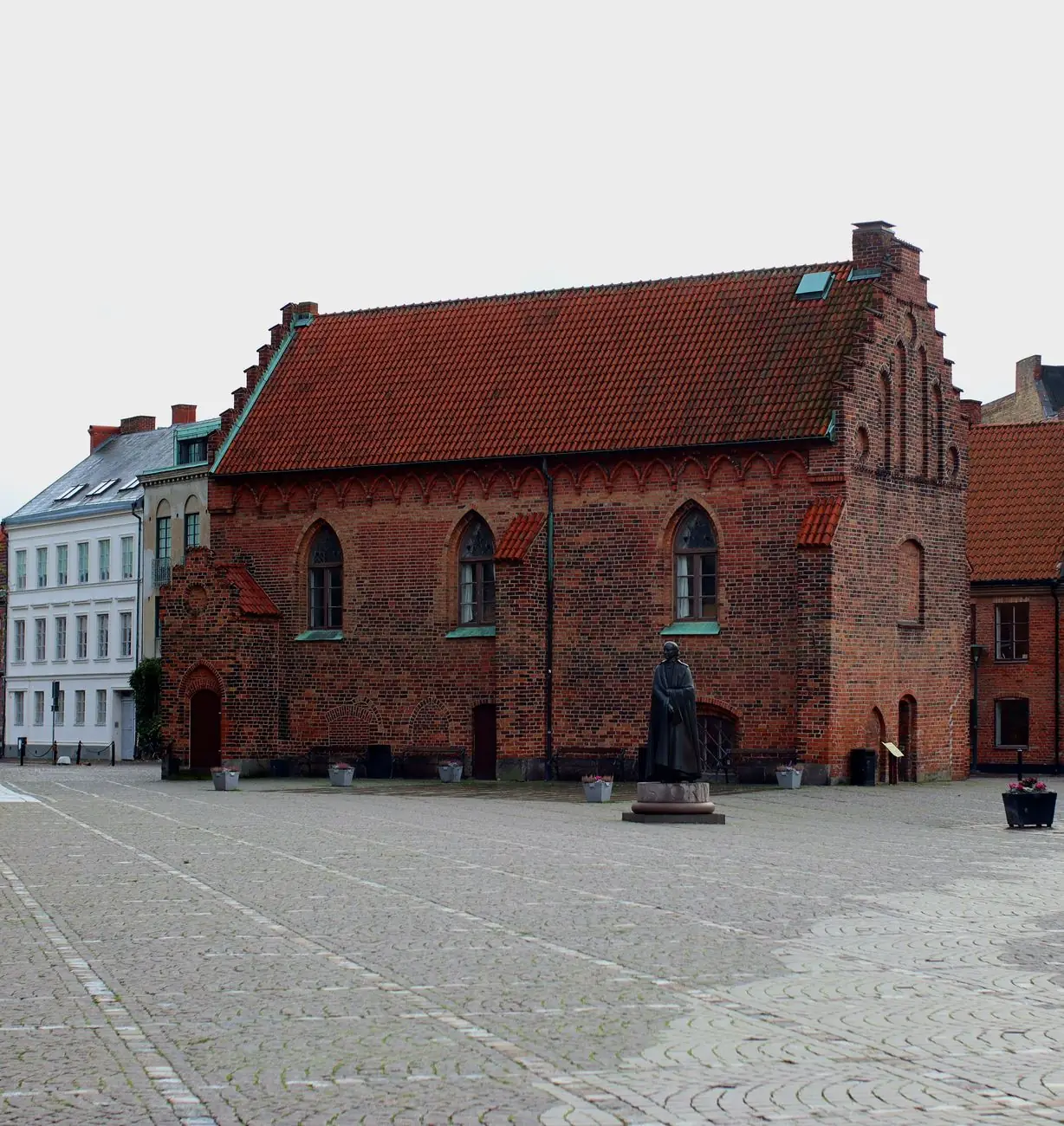
Walk around the cathedral towards Liberiet, the red-brick building immediately south of the church. Look at its stepped gables, pointed windows and steep tiled roof. The fifteenth-century former cathedral library gives you a surviving building to set alongside the museum’s objects.
Today it is a pilgrimage centre with prayer, meditation and group activities. Treat the public exterior as the route anchor and check the church’s programme for an appropriate visit inside. It is a working religious space, rather than a museum room open whenever you happen to pass.
For a booked alternative, compare the Lund private romantic walking-tour option. Request the actual Drotten route and permitted ruin access before booking. This does not include the Historical Museum or Liberiet; confirm corrected meal-stop descriptions rather than treating a pharmacy as a restaurant.
A bakery pause, then an optional underground finish
We recommend Broder Jakobs at Klostergatan 9 for a pastry or sandwich break. Visit Lund includes the bakery in its local café suggestions, and its own site lists bread, buns and sandwiches. It fits the return towards the central streets; choose from the current counter and check the day’s service.
If access is available, continue to Drotten’s church ruins beneath Kattesund 6A. The official city walk directs visitors through the adjacent restaurant or Gamla Lund office when open. Check that arrangement before adding the descent to your afternoon. Look at the surviving walls and the site’s interpretation, rather than expecting an intact church interior.
If the entrance is shut, keep the above-ground street walk as the finish and save the ruins for another visit. In rain, shorten the exterior stops and spend more time with the museum displays. Shoes with grip help on wet paving and any steps into the ruins; ask about access before travelling if stairs are difficult.
Check before you go
Opening arrangements and visitor rules can change. Check the official information before your trip.
- Museum exhibitions and renovation notices
- Current museum season and holiday exceptions
- Hunnestad stones and reconstruction
- Liberiet current identity and architecture
- Historic Liberiet
- Official walking anchors and ruin access
- Local bakery recommendation
- Bakery range and address
- Lund private romantic walking-tour option — activity details