Restoration comes before the route
A 25 September 2026 official report described ongoing restoration of buildings and inscription halls at Kuthodaw. On 24 October we could not confirm unrestricted visitor access or a reopening date for affected areas. Treat those areas as unavailable until confirmed locally; do not make a particular hall a required stop.
Packtricia will check for meaningful access changes, but check the venue before travelling. If either compound is unavailable, use only a permitted public viewpoint or a directly confirmed meal as the alternative. Broader official advice against leisure travel still takes priority.
Find Kuthodaw first
Kuthodaw Pagoda lies at the foot of Mandalay Hill. Its 729 marble tablets preserve a nineteenth-century recension of Buddhist scripture. Each stone has its own shelter: the subject is the text and its preservation, not merely a field of white spires.
Where permitted, pause beside one open-sided shrine to see how the slab is supported and how lines of script fill its faces. Then step back to read the repeated shelters and avenues of trees as a whole. Do not touch the inscriptions, enter work zones or assume every row forms an open walking route.
Mobile data for your trip. Check what your current plan includes for roaming. If you need another option for maps, messages and booking details, compare NXTL eSIM coverage and rates. Check that your phone supports eSIM and is unlocked, and check coverage for every stop. Download important maps and confirmations for offline use too.
Notice how Sandamuni differs
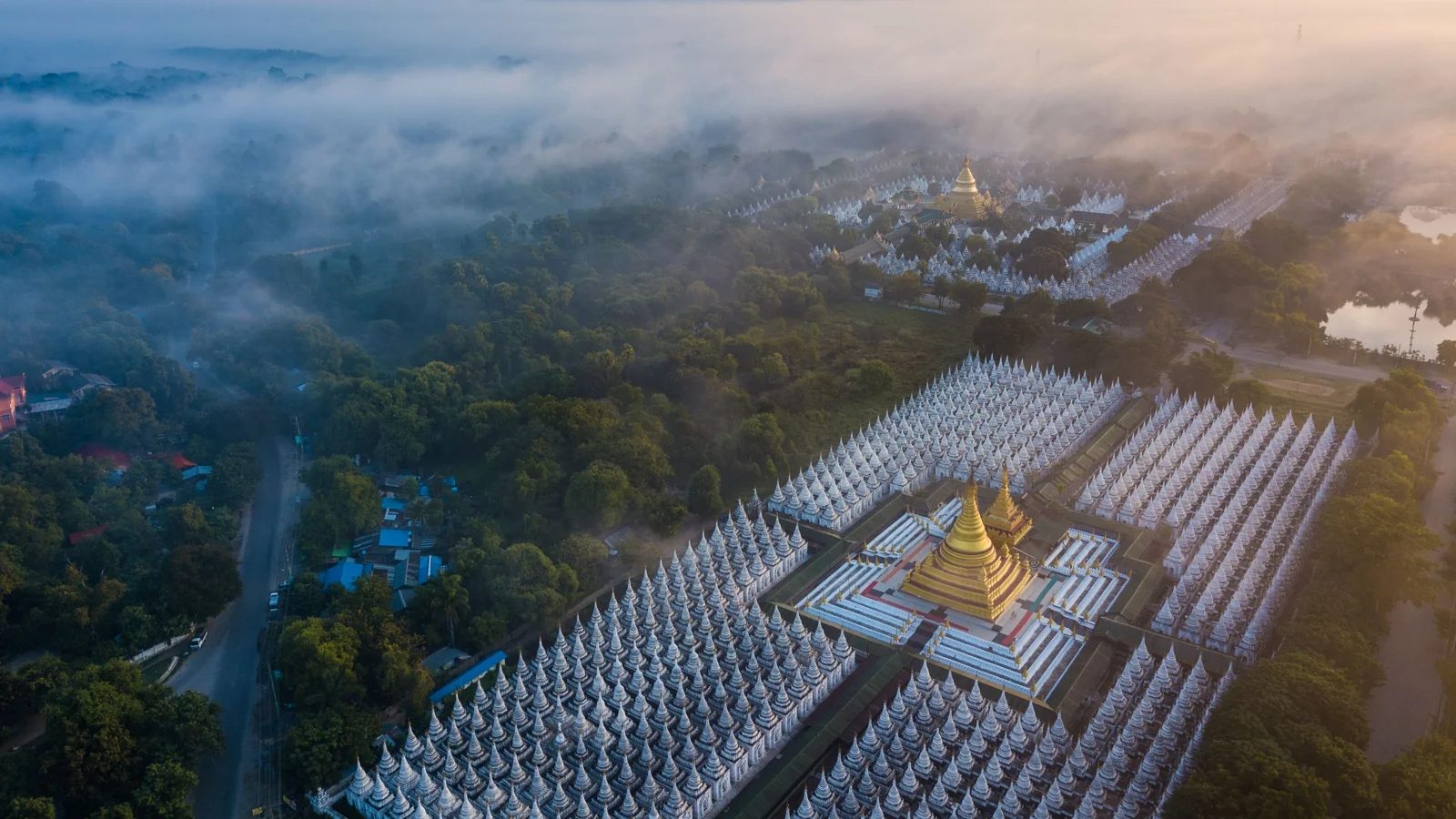
Sandamuni Pagoda is a separate nearby compound with dense ranks of white shelters around a central golden stupa. Its stone inscriptions include commentaries on Buddhist texts. The photograph shows this compact layout; it should not be mistaken for a close-up of Kuthodaw.
If both sites are open, make the contrast the focus: a single slab, its shelter, the spacing of the rows and the central shrine. A guide who can explain the writing may add more than rushing through every aisle. Ask about guiding arrangements and fees before agreeing.
Add a meal, not a chain of compulsory temples
Mingalabar, 71st Street works as a separate city meal after the hill-foot area. The official branch information confirms Myanmar curries and seasonal side dishes. Check current service and explain allergies; fish-based seasoning can matter even when vegetables appear central to a dish.
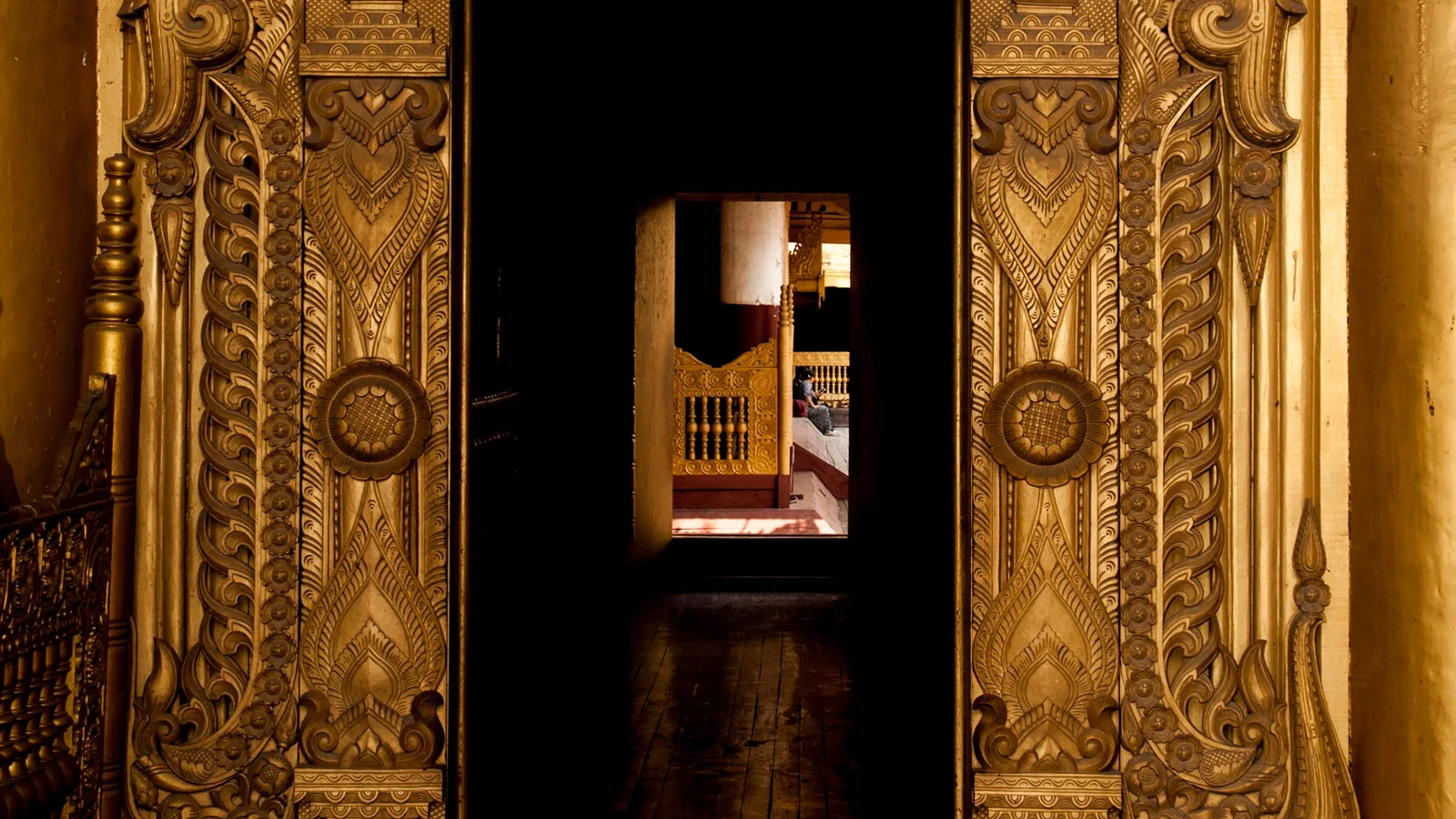
Shwenandaw’s carved teak is another worthwhile nearby landmark, but restoration was reported in April 2026. We did not confirm unrestricted interior admission on 24 October. Ask specifically about the monastery rather than assuming a ticket bought elsewhere includes an open interior.
Dress for worship and exposed paths
Cover shoulders and knees, and follow local instructions on removing shoes and socks. Carry your footwear, water and a hat; choose grippy shoes for the streets between sites. If paving is wet, keep the route shorter and avoid damaged edges.
Leave enough time for the agreed return. A future visit should be built around confirmed access and a comfortable pace, with the hill summit an optional separate decision rather than a compulsory final climb.
Check before you go
Opening arrangements and visitor rules can change. Check the official information before your trip.
- Government of Canada — Myanmar travel advice
- FCDO — Myanmar regional travel warnings
- Myanmar Digital News — September 2026 restoration inspection
- UNESCO — Kuthodaw inscription nomination and site plan
- Open Context — Kuthodaw inscriptions research project
- Myanmar Digital News — Candamuni stupa and stone inscriptions
- Mingalabar — official Mandalay branches and cuisine
- Myanmar International TV — Shwenandaw restoration, April 2026