Plan the road journey before the archaeology
Vat Phou is south of Pakse near Champasak, not the hilltop Buddha at Wat Phou Salao across the city bridge. Tell a driver the full destination and agree a return trip with waiting time. Shared transport to Champasak may leave from Dao Heuang Market or the southern station, but you still need to establish the last leg to the monument and a realistic return. Do not assume an outward shared ride operates in reverse at the hour you want.
For the simplest day, reserve a vehicle through a Pakse operator or your accommodation and confirm whether the arrangement covers only transport or also a guide, admission and meals. Keep the driver’s contact and meeting place offline. A low headline fare is not useful if it leaves the return journey unresolved. A private car also lets you stop early if heat, steps or rain change the plan.
Use the museum to put the landscape in context
Start with the museum when it is open, especially if the temple’s history is new to you. It gives the outing a different rhythm from heading straight for the highest terrace. The museum and outdoor site have separate operating windows, so check both with the Vat Phou Office before travel; an open gate does not guarantee every indoor area is available.
The UNESCO designation covers a wider cultural landscape, including ancient settlements and waterworks, rather than one isolated ruin. Keep that larger arrangement in mind as you move out into the complex. The mountain-to-river alignment helps explain why buildings and pools occupy these positions. You do not need to visit every associated archaeological site to understand that relationship.
Follow the causeway and compare the two palace buildings
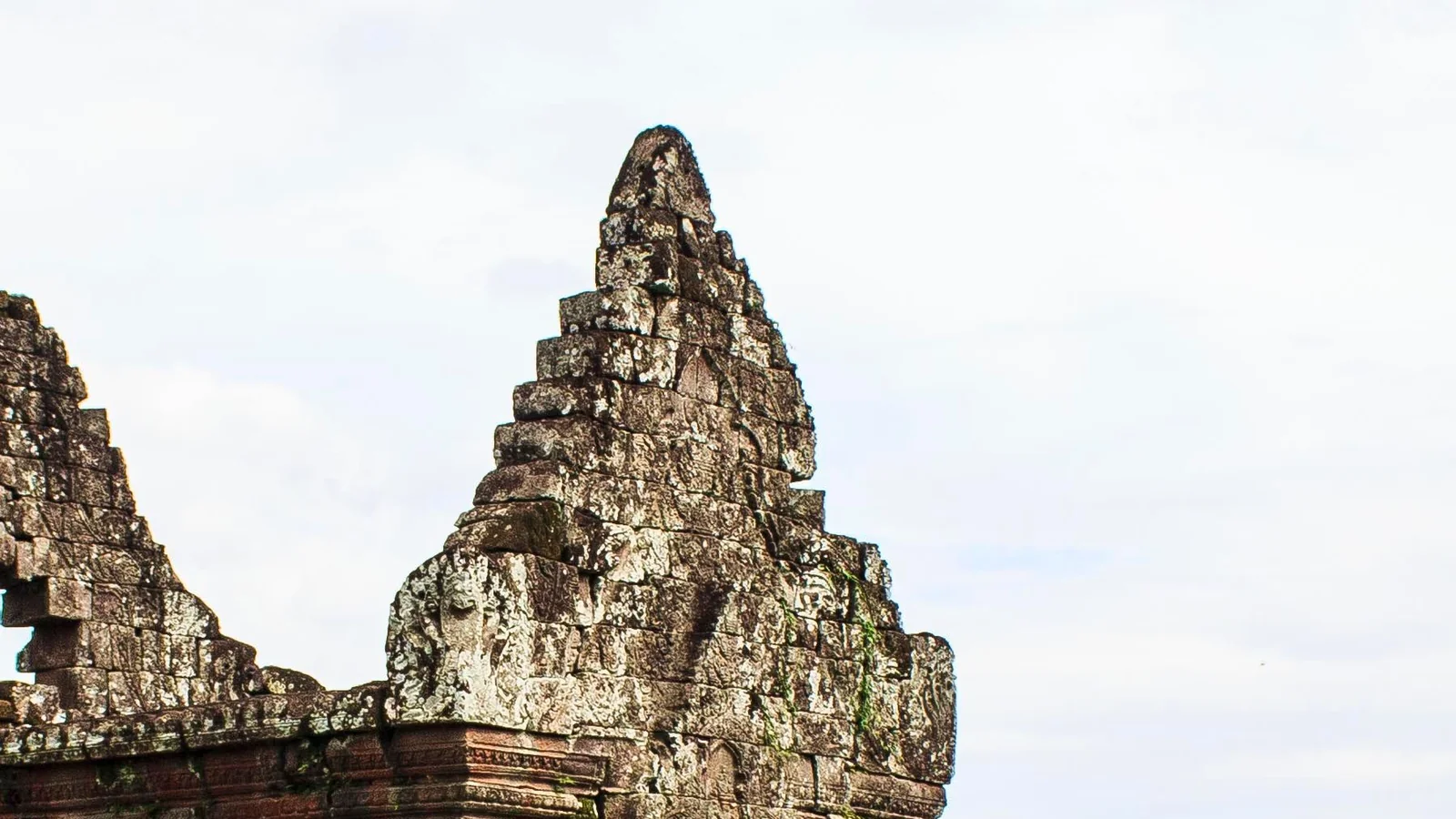
From the lower approach, take time over the reservoirs and the central causeway before the paired palace buildings. Look for the long stone façades, doorways and carved gables, and compare the structures on either side of the axis. Stay on the permitted visitor route rather than climbing loose masonry for a photograph.
This lower part makes a useful shorter visit if the upper steps are unsuitable. Decide here whether everyone wants to continue, and agree where to meet if the group separates. Carry drinking water and use shade when you find it; the open approach can be demanding even when the distance looks modest on a map. A slower look at fewer features is preferable to rushing through the entire complex.
Make the sanctuary climb a choice
The route rises towards the sanctuary beneath the cliff and sacred spring. The steps are uneven, and wet stone can alter the effort and footing. Wear shoes that stay on your feet, keep a hand free and turn back if conditions exceed your comfort. Do not promise yourself the upper terrace simply because a vehicle brought you to the entrance.
Where access permits, pause to look back towards the plain and the approach you followed. The changing height makes the planned landscape easier to read. Keep religious clothing and behaviour appropriate around the sanctuary, follow current barriers and leave any worship undisturbed. The outing works without a scramble beyond the signed route or a search for an unofficial shortcut.
Allow lunch and a calm return to Pakse
Agree a lunch stop in Champasak with your driver rather than hoping a remote entrance café will suit every dietary requirement. If the meal needs certainty, arrange it before departure or bring a packed alternative. Keep enough time for the road back; the visit is not complete when you reach the upper terrace.
Back in Pakse, a coffee or simple meal at Café Sinouk in Ban Lakmuang is a useful way to finish if service is available. Its own kitchen offers Lao and international dishes, so it works for companions who want different things after the outing. Check the menu and allergens directly. Leave the Bolaven Plateau for another day rather than treating the return as the start of a second long circuit.
Mobile data for your trip. Check what your current plan includes for roaming. If you need another option for maps, messages and booking details, compare NXTL eSIM coverage and rates. Check that your phone supports eSIM and is unlocked, and check coverage for every stop. Download important maps and confirmations for offline use too.
Check the site and season before setting off
On 25 October 2026, the Vat Phou Office continued to publish site and museum visiting arrangements; no specific closure of this suggested visitor route was found in the checked official information. Check the Office before travel for current access, conservation restrictions and ticket arrangements. The dated review is not a guarantee for your trip.
In the drier months, plan around sun and heat. In the wetter season, ask about current road and stair conditions and shorten the outing when necessary. Pack secure shoes, a temple-covering outfit, sun protection and a light rain layer, with documents and phone kept dry. Keep steep sections optional and do not substitute an unmarked hillside route when a visitor path is closed.
Check before you go
Opening arrangements and visitor rules can change. Check the official information before your trip.