Read the entrance instructions
Book Musée d’Orsay through its official ticketing site. Public-area renovation was underway when reviewed on 8 October 2026, with works announced from March 2026 through summer 2028. The museum remains open; use the entrance shown on your ticket rather than joining whichever queue looks shorter.
Mobile data for your trip. Check what your current plan includes for roaming. If you need another option for maps, messages and booking details, compare NXTL eSIM coverage and rates. Check that your phone supports eSIM and is unlocked, and check coverage for every stop. Download important maps and confirmations for offline use too.
For a booked alternative, compare the Musée d’Orsay admission option. Check current dated admission and exhibition terms rather than historical exhibition wording in the URL. This is entry, not a guided tour; security and renovation arrangements still apply.
Use the station as your first artwork
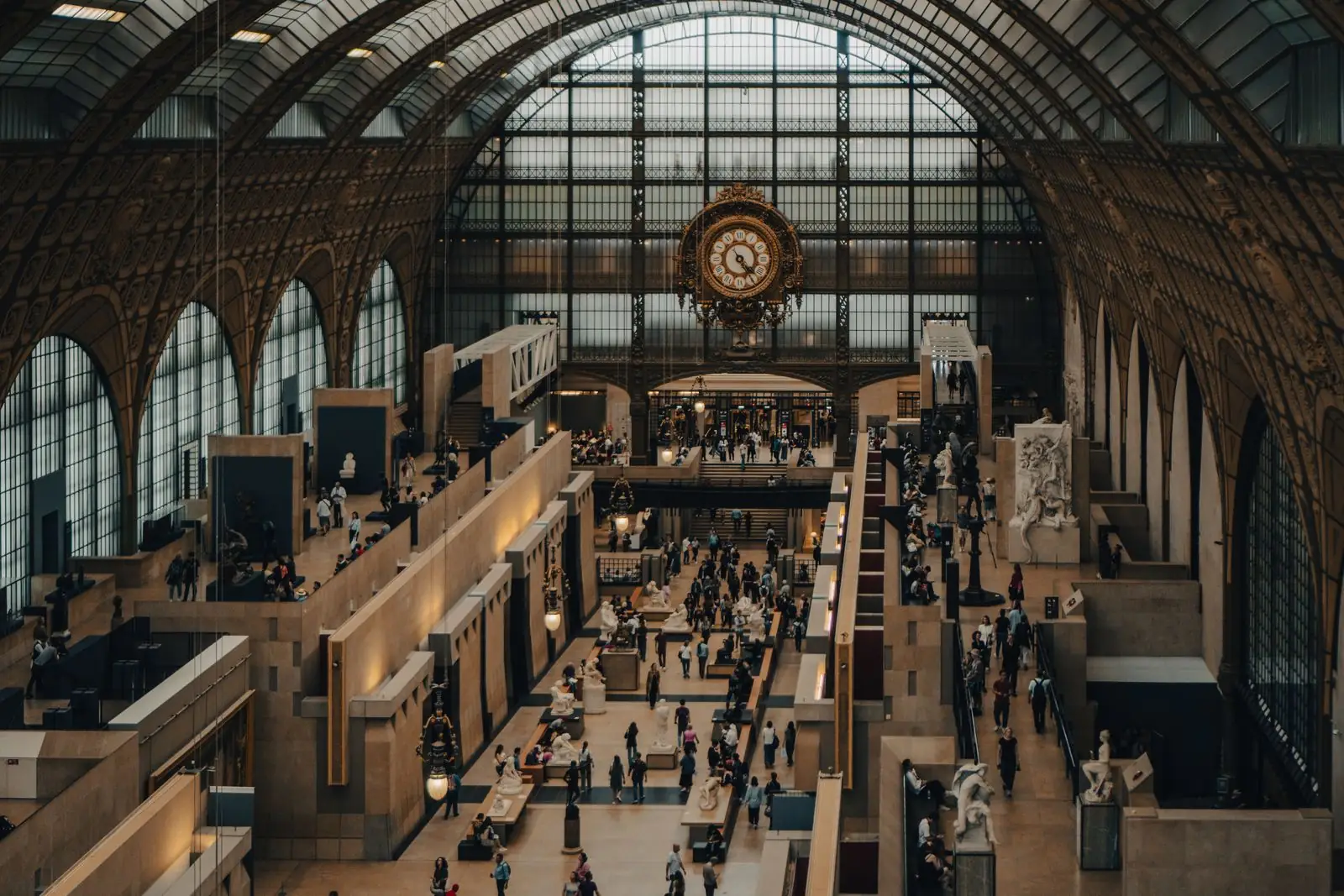
Pause in the great nave to notice the roof, light and retained station character. Then choose a collection route: the Impressionist galleries are a useful anchor if that is your main interest, while sculpture in the nave gives a different way to start. Consult the current map because displays and access can change.
Leave room for a few paintings
Choose a small number of works to look at closely instead of turning the visit into a checklist. Compare brushwork and colour across neighbouring pictures, then move on when you have had enough. A shorter visit can concentrate on one gallery area plus the nave; a longer one can add another period without also booking the Louvre that afternoon.
Pause at Café Campana
Consider Café Campana after the fifth-floor Impressionist galleries. Its seasonal menu and setting beside an exterior clock make it a useful on-site break. Museum admission is required and the restaurants do not take ordinary table reservations. Café de la Gare under the nave is the simpler counter-service alternative.
Keep access and outdoor plans flexible
The museum directs visitors with reduced mobility to the forecourt entrance during the works. Packtricia will check for changes; always check the museum’s latest access notice before travelling. The roof terrace is seasonal and weather-dependent, so make a short Seine-side walk your outdoor alternative. Remember the regular Monday closure when assigning this outing to a day.
Check before you go
Opening arrangements and visitor rules can change. Check the official information before your trip.