Begin with the correct mosque
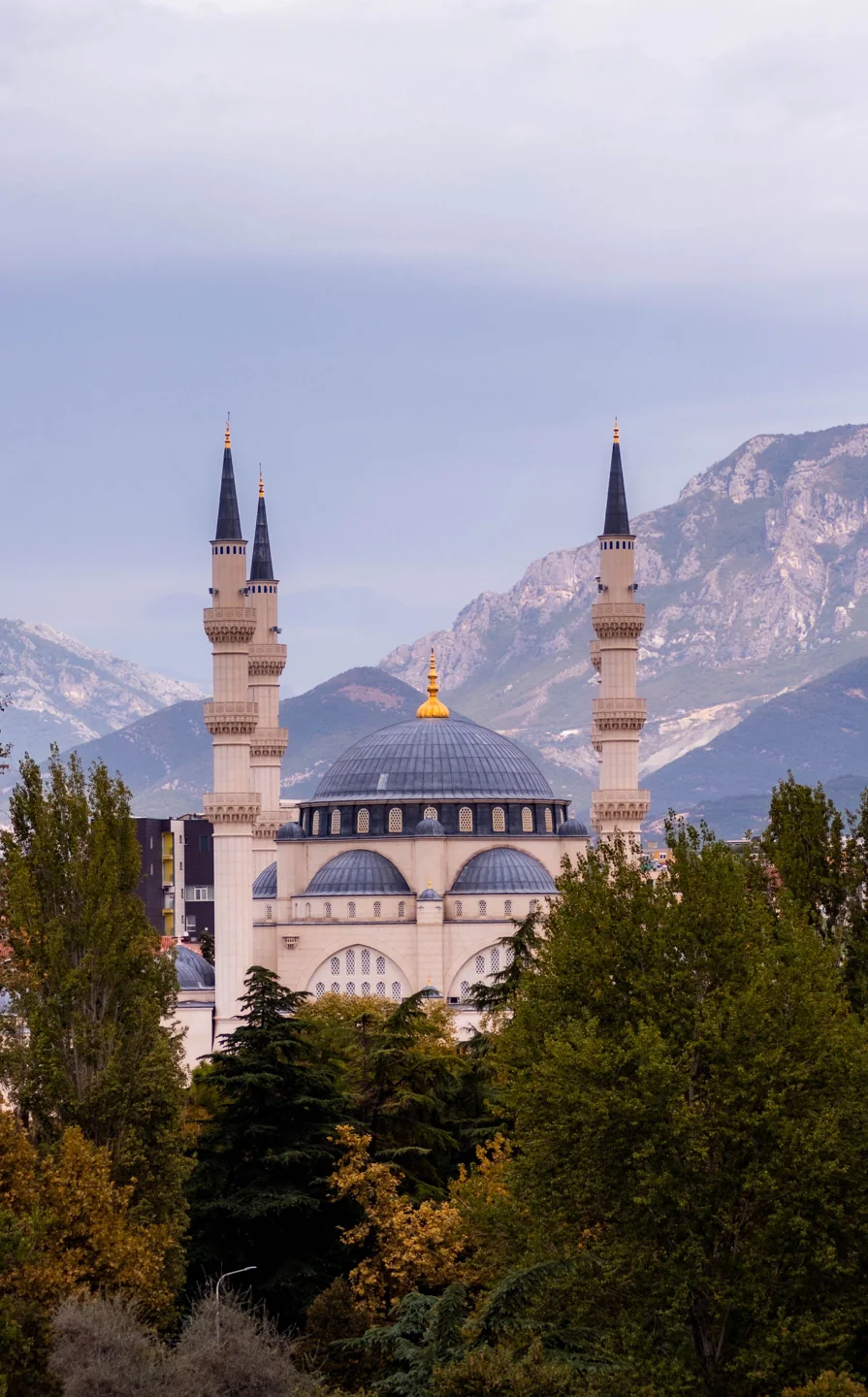
Find Namazgah Mosque near the parliament area, rather than the smaller Et’hem Bey Mosque at Skanderbeg Square. Visit Tirana records the larger mosque’s official opening in October 2024. Its domes and four minarets create a clear landmark, but this is an active place of worship as well as an architectural stop. Leave entrances and the routes people use for prayers clear.
View the overall shape from a permitted public position before considering entry. Domes, smaller roof forms and minarets reward a look at different scales; you do not need access to every part of the complex to understand the exterior. Avoid crossing busy roads merely for a particular photograph. Use actual pedestrian crossings and choose a viewpoint that does not interrupt those arriving to worship.
Mobile data for your trip. Check what your current plan includes for roaming. If you need another option for maps, messages and booking details, compare NXTL eSIM coverage and rates. Check that your phone supports eSIM and is unlocked, and check coverage for every stop. Download important maps and confirmations for offline use too.
Ask about visitor entry and follow the venue’s rules
Visitor sightseeing and worship are different uses of the building. Ask the attendants whether entry is possible at that time and follow their instructions for clothing, shoes and photographs. Suitable shoulder and knee coverage is useful, with a head covering if required for your visit. Do not assume a tourism listing describing the building as open establishes unrestricted visitor entry at every hour.
If a prayer period or another restriction prevents sightseeing, keep an exterior stop and continue with the walk. Do not wait in a doorway or treat the worshippers as part of the attraction. Any guided walk must respect the same access conditions. Confirm what your selected product actually includes before paying; a mosque stop on an itinerary does not promise an interior tour.
Continue to Tanners’ Bridge as a separate historic layer
Locate Tanners’ Bridge on your map and use the present street crossings to reach it. The municipality traces this stone bridge to the Ottoman period and a route connecting Tirana with the eastern highlands. It once served the area of leather workers and butchers. That commercial story gives this small structure a purpose beyond being another object to photograph.
Look at the main arch and smaller side openings from the public approach. The municipality describes pedestrian use after restoration. The bridge and modern riverside setting do not form an uninterrupted historic river crossing in the way a quick photograph might suggest. Take care with the paving, keep other pedestrians moving and choose an exterior look if the surface or approach is unsuitable for your group.
Choose a café pause near the Pyramid
Continue towards the Pyramid area if you want to make this a longer central outing, then consider Komiteti–Kafe Muzeum. Tirana-based writer Eri Mataj recommends it for its collection of everyday objects and retro furnishings. Coffee or tea gives you a reason to spend time looking around rather than hurrying through the room for photographs. Check the opening and choose an order from the actual menu.
The central café-museum is the relevant stop here; Komiteti Diellor is another location and would change the route. Treat the display as a café collection rather than a substitute for a researched museum exhibition on dictatorship. After the serious history of a chosen museum, or the etiquette of a worship space, a seated pause can give the day a more comfortable rhythm.
An organised route if you prefer interpretation
A guide can help explain how Tirana’s buildings connect across different periods. Compare a central walk with the independent outing before committing: it may cover considerably more than the mosque and bridge. Keep time for any museum visit you choose separately and confirm languages, access and the actual meeting point.
Compare the scope before booking
The following researched orientation product includes a Namazgah stop in its published route. Tanners’ Bridge and the café suggested here are not promised inclusions, so arrange them independently if you want this exact combination.
Compare this Guided walk through Tirana’s central landmarks It is a guided orientation route through the centre, including stops around the Clock Tower, Pyramid and Namazgah Mosque. Do not assume museum entry, a tower climb or mosque interiors are included: the listing establishes guiding, while access and tickets need separate confirmation. Check your selected language, meeting point and date.
Shorten the route without losing its point
For a shorter outing, choose the mosque exterior and bridge, then return using your map. For a longer day, continue to the Pyramid plaza and the central café. A sun hat, water and comfortable shoes help in warm months; add rain protection and a removable layer when the season calls for them. Keep worship access, café opening and optional paid activities as separate decisions so one unavailable stop does not undo the whole walk.
Check before you go
Opening arrangements and visitor rules can change. Check the official information before your trip.
- Visit Tirana: Namazgah Mosque, opening history and location
- Municipality of Tirana: Tanners’ Bridge and historic route
- Eri Mataj, Tirana resident: Komiteti café-museum
- Municipality of Tirana: Komiteti identity and Fatmir Haxhiu address
- Municipality of Tirana: visitor map and route locations
- Visit Tirana: Pyramid visitor context